
By Peter Grear, with AI Assistance
Published: December 3, 2025
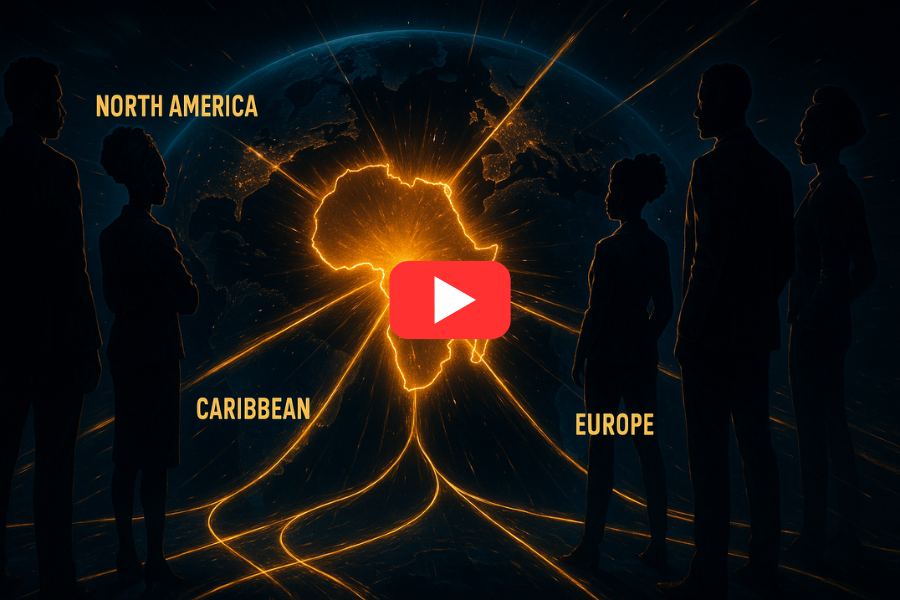
In 2003, the African Union took a historic step by recognizing the global African diaspora as Africa’s “Sixth Region.” It was an emotional victory, a symbolic bridge between the continent and its 200+ million descendants scattered across the world. But more than twenty years later, the Sixth Region remains a vision without the structural mechanisms required to make it truly powerful.
That is what makes the Right of First Refusal (RoFR) so transformative.
If embraced, RoFR would give Africans and their global diaspora the first opportunity to invest in, own, or partner on Africa’s major economic projects—before foreign entities can compete. This single policy would fundamentally change the economic destiny of the Sixth Region and reshape the balance of power between Africa and the world.
RoFR is not simply a legal concept. It is a tool of liberation, a strategy of empowerment, and a practical pathway to rebuild Pan-African unity through shared ownership.
- RoFR Opens Direct Access to Africa’s Economic Future
Africa is now the world’s youngest, fastest-growing, and most resource-rich economic frontier. Yet diaspora Africans often find themselves locked out of major opportunities. Foreign corporations dominate deals in mining, telecommunications, real estate, agriculture, and energy—while diaspora entrepreneurs struggle to gain entry.
RoFR shifts this dynamic overnight.
It creates:
- A guaranteed lane for diaspora investment
- Priority seats at the economic table
- A structural right to participate in African growth sectors
- A framework that protects diaspora bidders from being undercut by multinational giants
The Sixth Region becomes not just culturally linked to Africa—but economically embedded in its development.
- RoFR Creates a Level Playing Field With Foreign Corporations
Right now, diaspora entrepreneurs cannot compete with foreign nations who bring massive capital, political pressure, military ties, or sophisticated lobbying networks. RoFR neutralizes these imbalances by forcing foreign corporations to compete only after Africans and the diaspora have had their chance.
This strengthens:
- Local ownership
- Diaspora partnership
- African government negotiation power
- Transparent, Africa-first procurement practices
It is the economic equivalent of standing up straight after centuries of being pushed down.
- RoFR Unifies Diaspora Capital Through Coordinated Investment
Diaspora wealth is powerful but fragmented—spread across the U.S., Canada, UK, Caribbean, Latin America, and Europe. RoFR gives the global African family a common investment destination, enabling:
- Diaspora sovereign funds
- Venture capital coalitions
- Pan-African real estate consortiums
- Diaspora-led tech incubators
- Cross-border cooperative ownership models
With RoFR, the Sixth Region becomes a coordinated economic bloc, not a scattered identity.
- RoFR Strengthens Diaspora Identity and Belonging
For generations, the diaspora has struggled with belonging: feeling African in the West, but “Western” in Africa. RoFR resolves this tension through structure.
It says:
“You are not an outsider; you are a primary stakeholder.”
By reinforcing belonging economically, RoFR deepens belonging emotionally.
It encourages return, investment, business creation, cross-continental collaboration, and real reconnection.
- RoFR Creates a Pan-African Geopolitical Bloc
With RoFR:
- Caribbean nations gain stronger trade leverage
- Afro-Latino governments deepen Africa ties
- African Americans gain continental investment routes
- African immigrants gain legal pathways to dual economic citizenship
This forms a Black-led geopolitical and economic bloc capable of influencing global policy—from climate negotiations to digital trade to development finance.
- RoFR Ends the Extractive Economic Model
For decades, multinational corporations extracted African wealth without local or diaspora benefit. RoFR ends this model by:
- Requiring African and diaspora ownership
- Retaining more value on the continent
- Ensuring wealth circulates within the global African family
- Cutting off exploitative contracts at the source
Africa sets the terms instead of accepting them.
Conclusion: RoFR Is the Sixth Region’s Missing Piece
Symbolic unity is no longer enough. The Sixth Region needs structural power. RoFR provides it.
This is not just policy—it is a generational opportunity for the diaspora to reclaim economic agency, build global Black wealth, and shape Africa’s emergence as a world power.
RoFR would transform the Sixth Region from a cultural idea into a global African economic reality.
Call to Action
Donate to GDN – Greater Diversity News | Subscribe – Greater Diversity News
Join the conversation — leave your take or a question.
Help grow The Economic Liberation of Africa conversation — forward to someone curious about Africa-centered opportunity.