
By Peter Grear, with AI assistance
Publication Date: February 2, 2026
For much of the post–Cold War era, U.S. influence in Africa rested on an assumption rather than a strategy: that American power was the default alternative to Europe’s colonial legacy and that African governments would naturally align with Washington’s political and economic priorities. That assumption no longer holds.
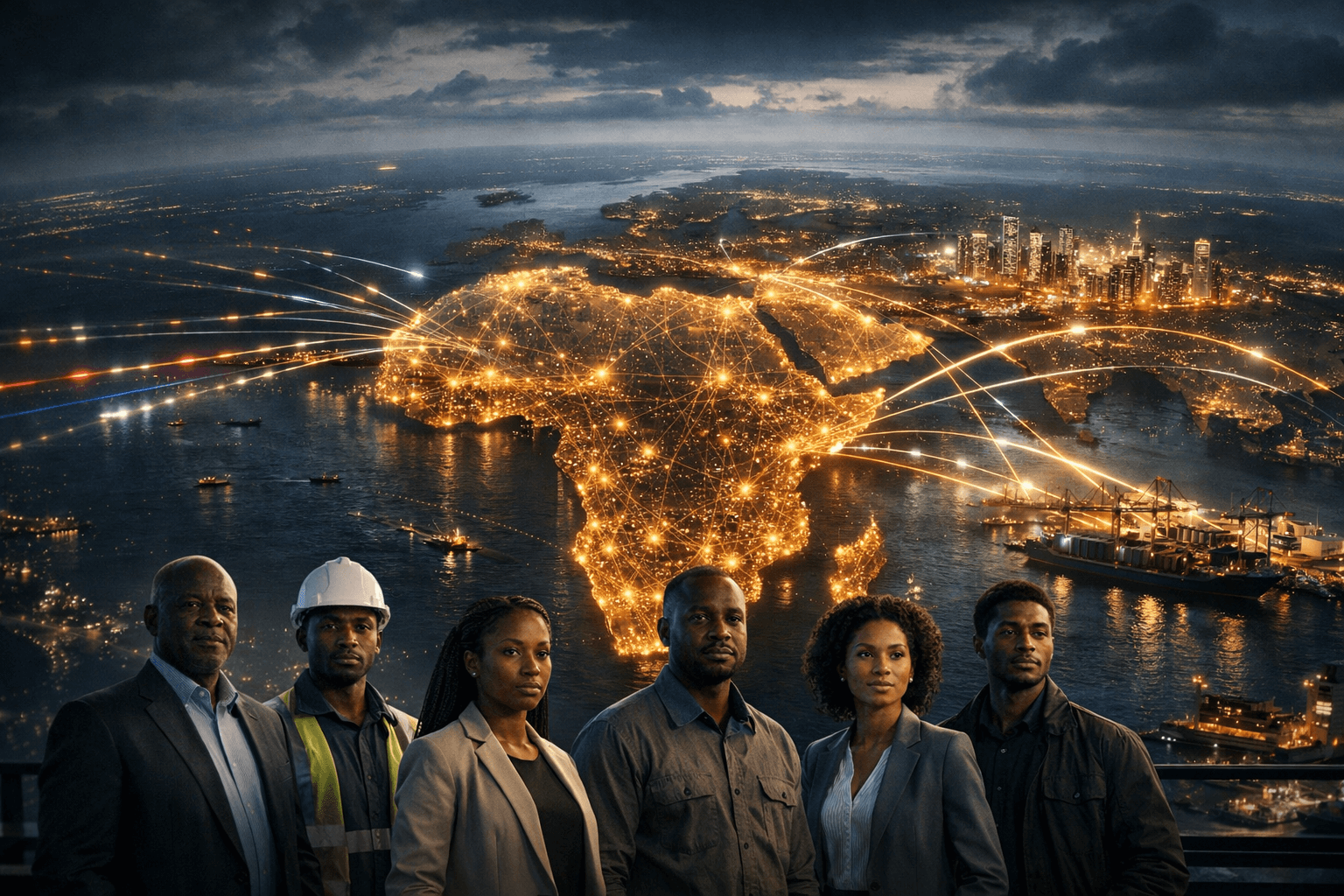
Across the continent today, African leaders are recalibrating relationships, diversifying partners, and asserting sovereignty in ways that expose the limits of U.S. influence. This shift is not sudden—but it is accelerating. And it is reshaping the balance of power in what is increasingly being called the new scramble for Africa.
The End of Automatic Alignment
For decades, U.S.–Africa relations were framed around security cooperation, aid, and governance conditionality. Programs tied to democracy promotion, counterterrorism, and market liberalization were positioned as pathways to development. But many African governments experienced these frameworks less as partnerships and more as leverage tools.
As global power becomes multipolar, African states are no longer compelled to accept political conditions attached to economic engagement. The rise of alternative partners has weakened Washington’s ability to dictate terms—and exposed the fragility of influence built on compliance rather than mutual interest.
Aid Without Infrastructure, Promises Without Scale
One of the most visible contrasts undermining U.S. credibility is the gap between rhetoric and delivery. While American officials emphasize values and transparency, competitors deliver ports, railways, energy systems, and industrial parks—often at scale and speed.
U.S. development tools remain fragmented: grants over projects, pilot programs over systems, announcements over execution. Even initiatives like African Growth and Opportunity Act (AGOA) increasingly feel outdated in a world defined by industrial policy, value-chain competition, and state-backed investment.
African governments, facing urgent needs for jobs and infrastructure, are choosing partners who can build now—not promise later.
Security Partnerships Without Legitimacy
Washington has long relied on security cooperation as an anchor of influence. Yet in several regions, especially the Sahel, U.S.-aligned security strategies are associated with instability rather than peace.
Popular resentment toward foreign military presence—often lumping U.S. involvement together with that of France—has weakened the legitimacy of American partnerships. In contrast, actors like Russia present themselves as alternatives unburdened by governance lectures, while China frames security and development as mutually reinforcing.
Whether these alternatives ultimately serve African interests is debatable. What matters geopolitically is that African leaders now have options—and are exercising them.
Multipolar Africa, Not a U.S. Sphere
The deeper issue is structural: Africa no longer fits into a U.S.-centric global order.
African nations are navigating a world where China finances infrastructure, the European Union seeks to retain influence through trade and migration controls, Gulf states invest heavily in ports and agriculture, and Russia competes for security access and diplomatic alignment.
In this environment, U.S. power—largely financialized and sanctions-driven—appears blunt and reactive. Influence that once flowed from dominance now requires negotiation, respect, and co-design. Washington has been slow to adapt.
Diaspora Blind Spots
Perhaps the most overlooked factor in America’s declining influence is its failure to meaningfully engage the African diaspora as a strategic economic and diplomatic asset.
The U.S. is home to millions of people with cultural, professional, and financial ties to Africa. Yet diaspora capital, talent, and entrepreneurship remain peripheral to official U.S.–Africa policy. This stands in stark contrast to emerging frameworks that see diasporas as bridges—not afterthoughts.
As Africa’s global relationships become more networked and less hierarchical, sidelining the diaspora is a self-inflicted limitation on U.S. relevance.
From Influence to Irrelevance—Or Redesign
This moment does not mark the end of U.S.–Africa relations. But it does mark the end of unquestioned American leadership.
If U.S. influence continues to rely on moral framing without material partnership, it will fade further. If, however, Washington recognizes Africa as a co-architect of the global future—rather than a theater of competition—it still has an opportunity to reengage on new terms.
The new scramble for Africa is not about flags or ideology. It is about who helps build the next century of growth—and who insists on managing the last one.
Join the Conversation
What do you think is driving the decline of U.S. influence in Africa—and can it be reversed? Join the conversation—leave your take or a question.
Help Grow the Movement
Help grow The Economic Liberation of Africa conversation—forward to someone curious about Africa-centered opportunity.
Support Independent Global Reporting
Donate to GDN – Greater Diversity News | Subscribe – Greater Diversity News