
By Peter Grear with AI assistance
March 2, 2026
For many Black students, college has long been framed as a path to access: access to credentials, access to networks, access to institutions, and access to opportunity. But the African Union’s idea of the Sixth Region offers a larger and more ambitious frame. The AU defines the African diaspora as people of African origin living outside the continent, regardless of citizenship or nationality, who are willing to contribute to the development of the continent and the building of the African Union. Its governing language also says the AU should “invite and encourage” the diaspora’s full participation as an important part of the continent.
That matters because it gives Black students a different way to think about themselves. Instead of seeing their future only through the narrow lens of surviving or advancing within systems that often marginalize them, they can begin to see themselves as part of a wider African world—one with its own history, institutions, developmental goals, and long-term future. This does not erase the local realities of racism, student debt, or unequal access. It expands the map. It suggests that Black students do not have to think only in terms of fitting into existing structures; they can also think in terms of helping shape a global African future. That interpretation builds directly on the AU’s formal invitation to diaspora participation.
The timing of this idea is important. Across many campuses, Black students are confronting a more uncertain environment around diversity initiatives, hiring pipelines, and the durability of institutional commitments. In that climate, the Sixth Region becomes more than symbolism. It becomes a framework for strategic reorientation. If Africa’s future is being planned not only in terms of politics but also trade, technology, innovation, cultural production, and institution-building, then Black students in the diaspora should be asking where they fit into that future. The AU’s Agenda 2063 explicitly describes itself as Africa’s blueprint and master plan for transforming the continent into “the global powerhouse of the future.”
For students, this shift begins with identity, but it cannot end there. Aligning with the Sixth Region is not just about saying, “I have African ancestry.” It is about asking what that ancestry requires in the present. It means thinking beyond symbolic heritage months and occasional campus events toward a deeper relationship with Africa and the diaspora: study, partnership, exchange, responsibility, and contribution. It means asking whether Black students will define success only as entry into existing institutions, or whether they will also prepare themselves to become builders, connectors, and stakeholders in institutions that serve the long-term interests of African people globally. That is an inference, but it is a reasonable one given the AU’s development-centered diaspora framework.
It also has a practical economic meaning. Black students need jobs, internships, mentorship, and pathways into the future. The Sixth Region concept can help widen that horizon. It encourages students to look not only at domestic labor markets, but also at Africa-related sectors and diaspora-linked opportunities in entrepreneurship, media, research, technology, trade, logistics, investment, policy, and education. It invites a generation to think in terms of campus-to-continent pipelines. If Africa is planning for inclusive growth and continental transformation, diaspora youth should be developing the skills, networks, and institutional relationships that allow them to participate in that growth. Agenda 2063’s core language about unity, self-determination, progress, and collective prosperity makes that broader reading legitimate.
There is also a leadership lesson here. Too often, Black student leadership is confined to campus programming, crisis response, or ceremonial representation. Those things matter, but the Sixth Region suggests something bigger: student leaders can act as early diaspora diplomats, institution builders, and economic bridge-makers. They can help connect HBCUs, Black student unions, Pan-African student groups, alumni networks, and young professionals to African institutions and diaspora organizations. That is not a fantasy. ECOSOCC—the African Union’s Economic, Social and Cultural Council—includes the African diaspora in its General Assembly structure, and recent ECOSOCC materials describe a formal legal framework for diaspora organizations to participate through the Permanent General Assembly.
Still, honesty matters. The Sixth Region is more fully developed as a strategic and political concept than as a universally understood operating system. Its implementation is uneven, and many Black students have never been introduced to it at all. That means the work ahead is educational as much as institutional. Students, alumni, media platforms, faculty, and diaspora organizations all have a role to play in translating the concept into something usable: reading groups, exchange programs, internship initiatives, partnership frameworks, procurement pipelines, policy forums, and digital communities that make the idea real. The AU framework opens the door, but people and institutions have to walk through it.
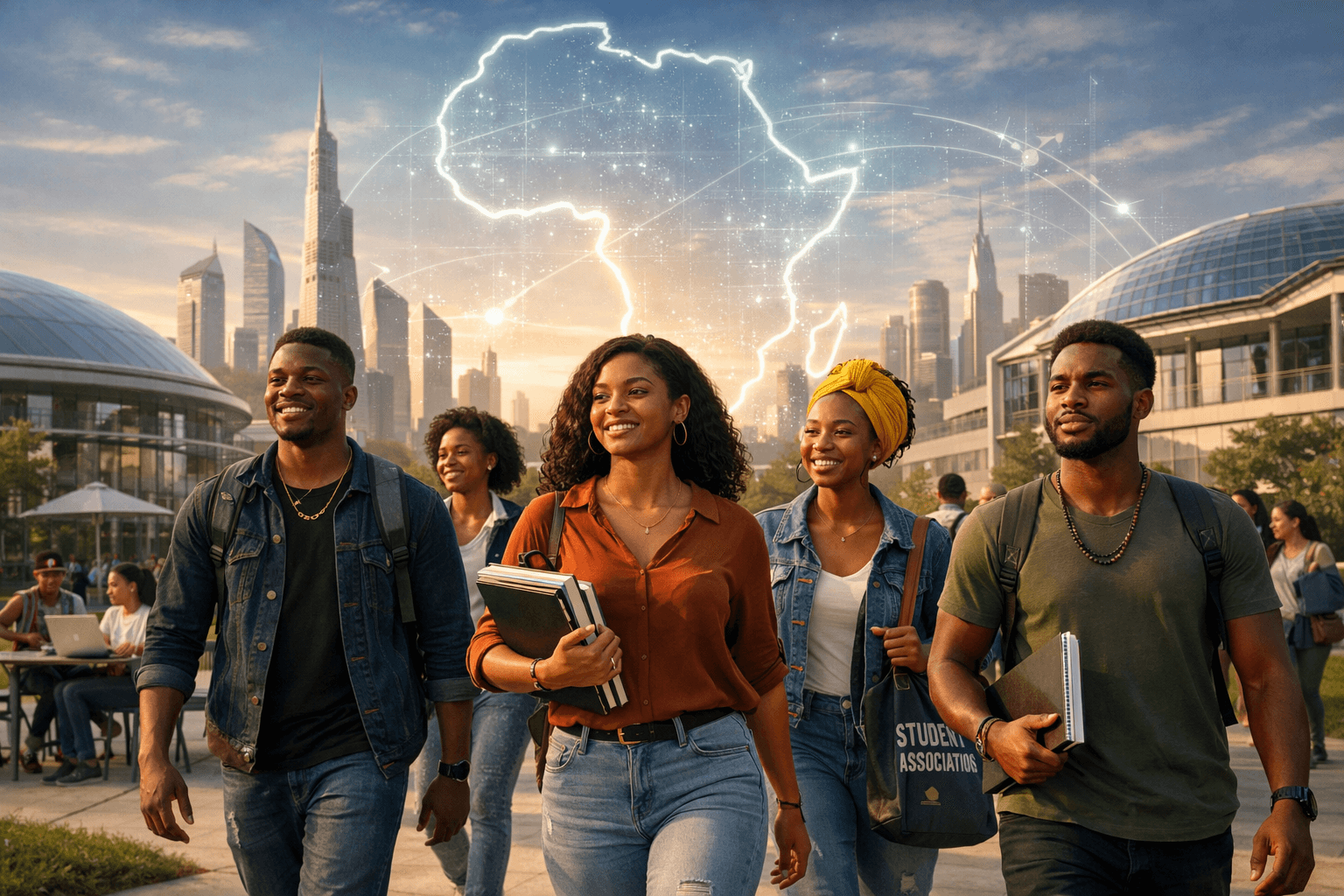
In the end, what the Sixth Region means for Black students is simple but profound. It means they can begin to see themselves not only as people seeking access, but as people with inheritance, responsibility, and strategic relevance in a larger African story. It means campus life does not have to be the boundary of their imagination. It can be the beginning of a wider mission.
For a generation looking for both purpose and opportunity, that may be one of the most important shifts of all.
Donate to GDN – Greater Diversity News | Subscribe – Greater Diversity News.
Join the conversation—leave your take or a question.
Help grow The Economic Liberation of Africa conversation—forward to someone curious about Africa-centered opportunity.