
By Peter Grear, with AI assistance
March 16, 2026
Africa is increasingly discussed as a strategic theater in the new global order. But beneath the speeches about partnership, security, climate, and development lies a simpler truth: the real prize is Africa’s minerals.
That is not speculation. It is the logic of the energy transition, digital infrastructure, advanced manufacturing, and geopolitical competition. The minerals needed for batteries, electric vehicles, power grids, renewable energy systems, electronics, and defense technologies are now central to industrial power. The International Energy Agency says demand for key energy minerals kept rising strongly in 2024, with lithium demand up nearly 30% and demand for nickel, cobalt, graphite, and rare earths up 6–8%, driven largely by electric vehicles, battery storage, renewables, and grid networks.
That helps explain why Africa matters so much.
The continent holds major reserves of critical minerals that the world increasingly needs. The African Development Bank has argued that critical minerals are central to the global energy transition, advanced manufacturing, and digital transformation, and that Africa has an opening to turn this mineral endowment into broader development gains. The Democratic Republic of the Congo alone remains the world’s cobalt giant; U.S. Geological Survey materials note that over half of global cobalt supply comes from the DRC, and USGS country data indicates the DRC holds about 55% of world cobalt reserves.
That reality changes the conversation.
For decades, African mineral wealth was treated mainly as a source of extraction. Raw materials left the continent, value was added elsewhere, and the largest profits were often captured abroad. What is changing now is not simply that the world wants Africa’s minerals more urgently. It is that African states, institutions, and development thinkers are increasingly asking a harder question: who will control the value chain this time?
That question is becoming more important because supply concentration and security have become global concerns. The IEA has warned that critical mineral supply chains face pressing risks tied to concentration, export controls, and economic security. In other words, access to minerals is no longer just a commercial issue. It is a strategic one. Countries and blocs are not competing for Africa out of sentiment. They are competing because Africa sits near the center of the industries that will shape the next era of power.
That is why Africa’s mineral story should not be reduced to mining alone.
The deeper issue is industrialization. The IEA’s 2025 report on stepping up the value chain in Africa argues that African countries have opportunities not only in mineral beneficiation, but also in low-emissions industrial production and clean energy technology manufacturing. The African Development Bank has made a similar case, emphasizing minerals-based industrialization as a catalyst for structural change. UN Trade and Development has also been pushing the same direction, supporting African efforts to move “from minerals to manufacturing” and to expand value addition instead of remaining exporters of raw material.
That is where the real battle is now: not only over who digs the minerals out of the ground, but over who refines them, who processes them, who manufactures with them, and who writes the commercial rules around them.
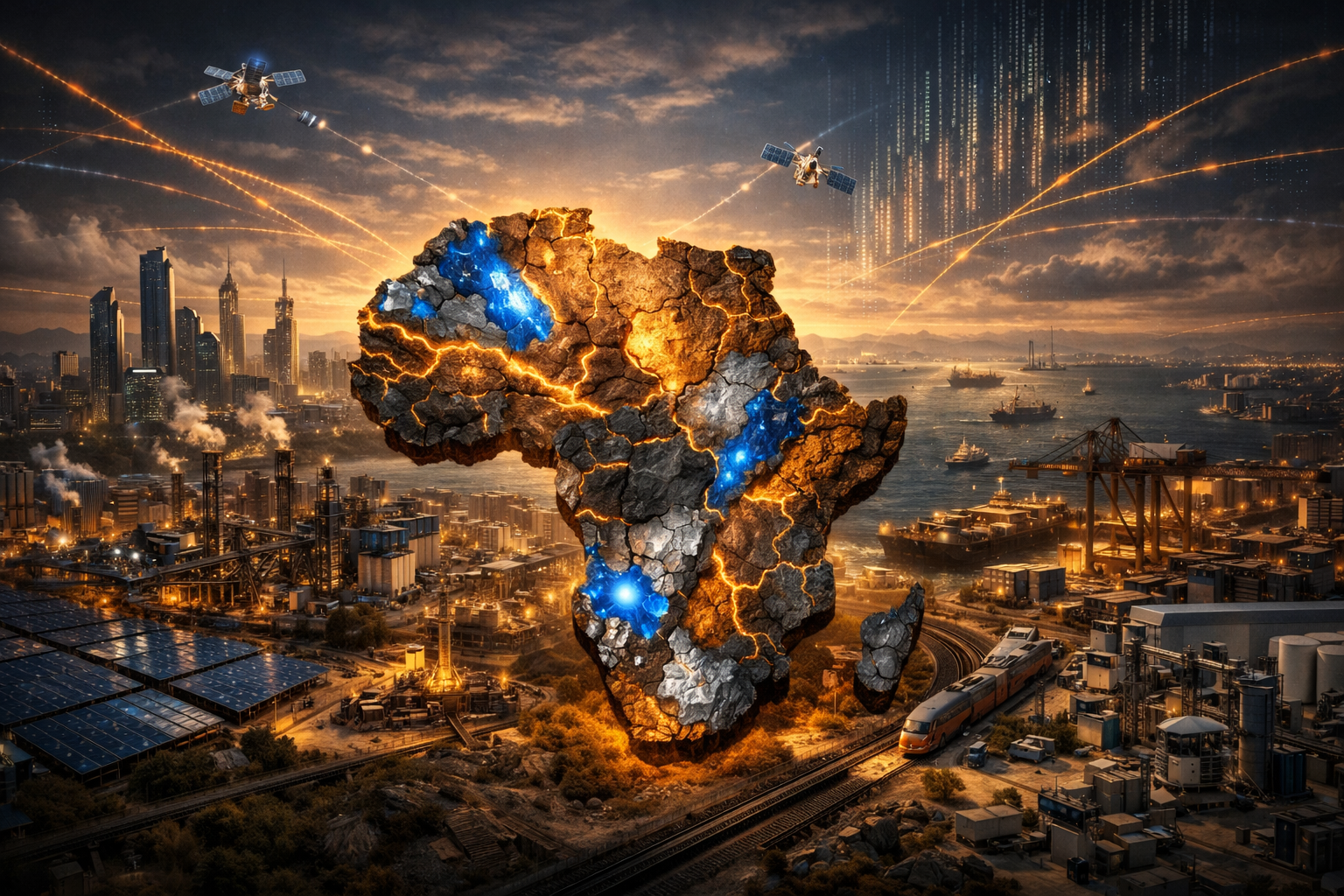
This is why Africa’s minerals are the real prize in the new global order. They are not merely commodities. They are leverage.
They can shape trade terms. They can shape industrial policy. They can shape sovereign bargaining power. And if managed strategically, they can help African countries move from being sites of extraction to architects of production.
But none of this is automatic.
Mineral wealth has never guaranteed development. Without strong institutions, transparent contracting, industrial policy, workforce development, and regional coordination, the continent can still end up rich in resources and poor in retained value. That is the danger. The opportunity is equally clear: if Africa connects mineral policy to processing, manufacturing, infrastructure, energy access, skills development, and regional markets, the current scramble for critical minerals could become the foundation for a new era of African economic power.
This is also where the diaspora should be paying close attention. If minerals are becoming the foundation of a new global industrial contest, then the question is not whether Africa matters. It is whether Africans and the global African diaspora will have structured pathways into the ownership, financing, procurement, policy, and enterprise opportunities forming around this shift.
The world is telling us, in plain terms, what it values. It values cobalt, lithium, graphite, copper, rare earths, and the industrial future they enable. The more urgent question for Africa is whether it will merely supply that future or shape it.
That is the real contest now.
And that is why Africa’s minerals are not just a resource story. They are a power story.
Join the conversation—leave your take or a question.
Help grow The Economic Liberation of Africa conversation—forward to someone curious about Africa-centered opportunity.
Donate to GDN – Greater Diversity News | Subscribe – Greater Diversity News