
By Peter Grear, with AI Assistance
Published: November 19, 2025
More than two decades ago, the African Union made a historic decision that continues to transform how the world views Africa and its extended family. In 2003, African leaders officially recognized the global African diaspora as the “Sixth Region” of Africa — a move that symbolized unity, acknowledged shared history, and opened the door to unprecedented political, cultural, and economic collaboration.
But what did the African Union actually envision when it made this declaration?
What does the Sixth Region mean in practice, not just in theory?
And how can diaspora-led platforms like GDN Global help bring that vision to life?
To answer these questions, we must examine the AU’s policy frameworks, summit declarations, and long-term strategies — all of which reveal a clear and powerful mandate:
Africa and its diaspora are meant to rise together.
The Legal and Policy Foundations of the Sixth Region
The AU’s recognition of the diaspora is not symbolic — it is grounded in policy.
- The Constitutive Act – Article 3(q)
The AU’s founding document was amended to state explicitly that the African Union must:
“invite and encourage the full participation of the African Diaspora in the building of the African Union.”
This single sentence changed everything.
It established diaspora involvement as a legal and institutional obligation — not an optional gesture.
- Assembly/AU/Res.1(XVIII) – Resolution on the Diaspora (2012)
This resolution is the political backbone of the Sixth Region. It:
- Recognizes the diaspora as a substantive entity contributing to Africa’s development
- Calls for systematic engagement between the AU and diaspora communities
- Connects diaspora participation to Africa’s broader integration agenda
This is the reason platforms like GDN Global must exist — because the AU assumed media, organizations, and institutions would step forward to activate diaspora participation.
- The Global African Diaspora Summit (Sandton, 2012)
Here, AU member states and diaspora leaders adopted a Declaration and a Programme of Action with four major pillars:
- Political Solidarity — strengthening unity between Africa and its diaspora
b. Socioeconomic Development — harnessing diaspora skills and finance
c. Cultural Renaissance — preserving and promoting shared heritage
d. Implementation Structures — creating working mechanisms and legacy projects
In simple terms:
The vision is political unity, economic empowerment, cultural cohesion, and structured collaboration.
What the AU Intended the Sixth Region to Become
When AU leaders use the term Sixth Region, they mean something very specific.
- A Global Partner in Development
The AU sees the diaspora as a strategic source of:
- Investment capital
- Technology and innovation
- Skills and professional expertise
- Advocacy and diplomatic influence
- Media and cultural power
The diaspora contributes over $100 billion in remittances annually.
The AU’s vision is to channel that same energy into investment, infrastructure, and institution-building.
- A Political Constituency with Global Influence
Africans in the U.S., UK, Caribbean, Latin America, and Europe influence foreign policy, elections, and public opinion.
The AU expects the Sixth Region to:
- Advocate for Africa
- Counter anti-Africa narratives
- Push for fair trade, debt relief, and sovereignty
- Challenge neo-colonial agendas
- Support Pan-African global alliances
The diaspora is Africa’s voice in the global arena.
- A Cultural and Identity Bridge
The AU acknowledges the diaspora as:
- Guardians of African culture
- Creators of global music, fashion, film, and language
- Key players in Africa’s global visibility
The Sixth Region is meant to elevate a shared identity — one that is African, diasporic, and global.
- A Youth & Innovation Engine
Africa is the youngest continent.
The diaspora is one of the youngest global populations.
Together, they form a 21st-century innovation powerhouse — in fintech, mobile tech, entertainment, education, AI, agriculture, and manufacturing.
The AU envisioned the Sixth Region as a global innovation network.
Why the Sixth Region Hasn’t Fully Materialized Yet
Despite strong policy foundations, implementation has been slow. The AU faces challenges:
- Limited public awareness
- Fragmentation among diaspora groups
- Lack of digital infrastructure connecting Africa and diaspora communities
- Competition from foreign powers shaping narratives about Africa
- Need for more organized diaspora institutions
This is precisely why GDN Global is so important.
The AU created the vision.
GDN Global is stepping in to help execute it.
How GDN Global Helps Realize the AU’s Sixth Region Vision
GDN Global aligns directly with the AU’s intentions by:
- Providing media infrastructure
A central platform for news, analysis, storytelling, and education.
- Strengthening diaspora–Africa communication
Connecting opportunities, organizing knowledge, and amplifying initiatives.
- Supporting economic empowerment
Highlighting investment paths, RoFR frameworks, innovation hubs, and business opportunities.
- Building global Pan-African awareness
Mobilizing diaspora pride, cultural unity, and shared identity.
- Advancing youth-centered engagement
Engaging future leaders in the movement for global African empowerment.
GDN Global is not merely reporting on the Sixth Region.
It is helping to build it.
Conclusion: The Sixth Region Is a Strategy, Not a Slogan
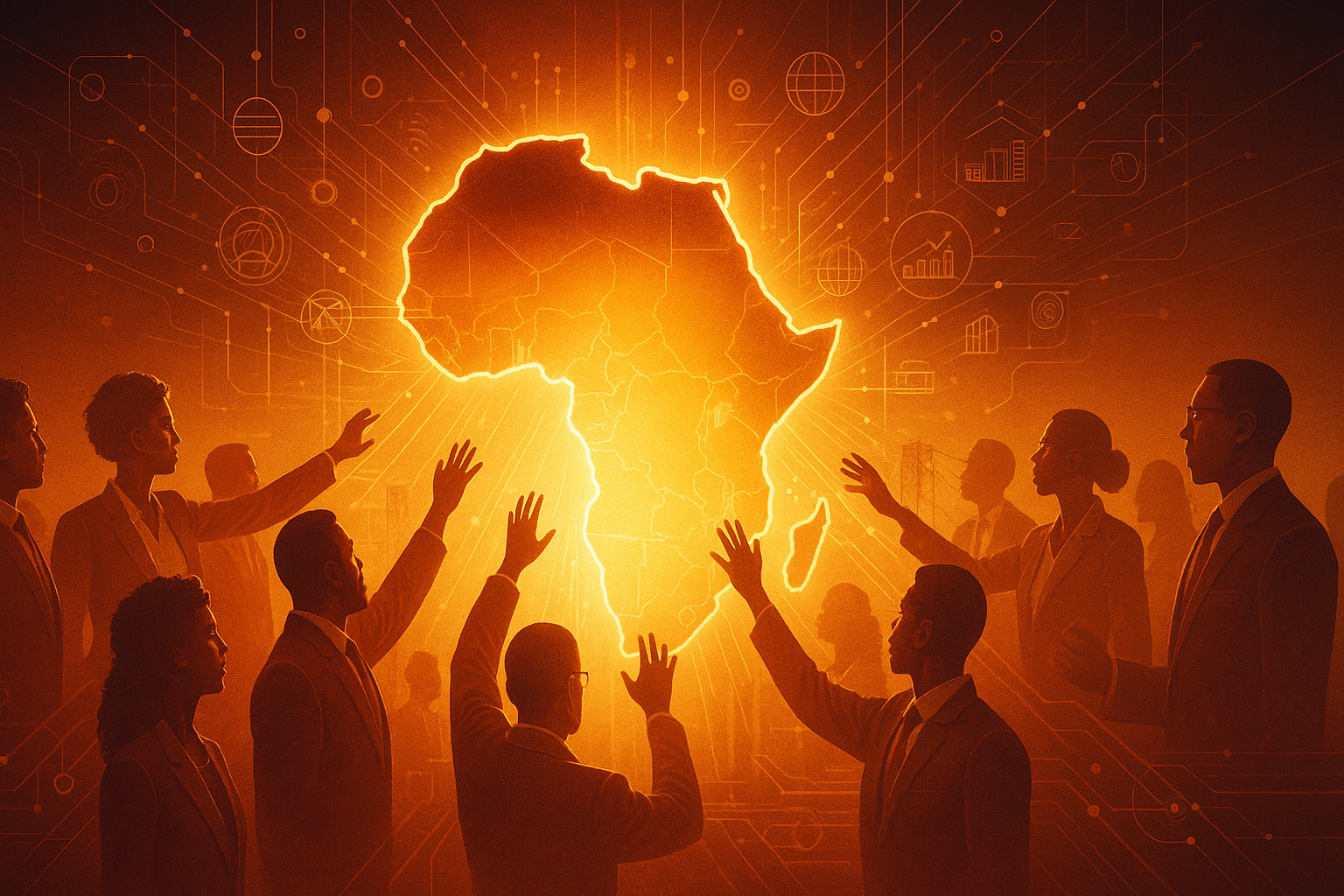
The African Union envisioned the Sixth Region as a global force — a region without borders, unified by purpose, identity, and shared destiny.
The Sixth Region exists.
What it needs now is activation.
With the launch of GDN Global, we are taking one step closer to bringing that vision to life.
Call to Action
Donate to GDN – Greater Diversity News | Subscribe – Greater Diversity News
Join the conversation — leave your take or a question.
Help grow The Economic Liberation of Africa conversation — forward to someone curious about Africa-centered opportunity.