
By Tony Grear
May 20, 2026
For generations, Historically Black Colleges and Universities have represented more than institutions of higher learning. They have been incubators of Black excellence, engines of social mobility, cultural anchors, and safe havens during some of America’s most hostile political and economic periods. Today, however, a new challenge is emerging — one that requires HBCUs, their alumni associations, and the broader Black community to think globally, strategically, and collectively.
At a time when diversity initiatives are under attack, educational funding is increasingly uncertain, and economic opportunities for Black Americans appear to be narrowing rather than expanding, organizations like the National Historically Black Colleges & Universities Alumni Associations Foundation and GDN Global are stepping forward with a broader vision.
That vision is rooted in one central idea: Black opportunity must no longer be confined by geography.
Through a new partnership between NHBCUAAF and GDN Global, soft skills training programs are being developed specifically to help students, alumni, and community members improve their professional positioning immediately. These are not abstract motivational seminars. They are practical, career-enhancing classes designed to strengthen communication, professionalism, networking, leadership presence, interviewing ability, workplace adaptability, and entrepreneurial thinking — the exact skills that often separate candidates who merely qualify from candidates who get hired, promoted, and funded.
Yet the partnership extends far beyond the traditional American job market.
By working with GDN Global, NHBCUAAF gains direct access to growing conversations surrounding Africa’s economic rise, the African diaspora, and emerging opportunities tied to infrastructure, technology, education, agriculture, media, logistics, tourism, renewable energy, and international trade across the African continent.
This matters now more than ever.
Across the United States, many Black professionals and students increasingly feel that the rules are changing in real time. Programs once designed to increase inclusion are being dismantled or challenged politically and legally. Corporate commitments to diversity are becoming more cautious. Public rhetoric around race and opportunity has become increasingly divisive. For many African Americans, particularly young graduates entering competitive markets burdened by debt and economic uncertainty, the future can appear unstable.
In this climate, expanding opportunity beyond America is not escapism — it is strategic diversification.
Africa, with the youngest population in the world and some of the fastest-growing economies globally, represents one of the most important frontiers of the 21st century. Nations across the continent are seeking partnerships, skilled professionals, educators, technologists, investors, creatives, and diaspora collaborators. The conversation is shifting from charity to ownership, from aid to equity, and from symbolic connection to economic participation.
This is where HBCUs should naturally lead.
HBCUs possess one of the largest concentrated networks of educated Black talent on Earth. Their alumni include engineers, educators, doctors, entrepreneurs, policymakers, artists, scientists, and business leaders whose collective influence stretches across generations. Organizations like NHBCUAAF provide a framework for those networks to operate collectively rather than institution by institution.
Unfortunately, many HBCU alumni associations are still not members of NHBCUAAF.
There are likely several reasons for this.
Some associations may simply be unfamiliar with NHBCUAAF’s mission or uncertain about the practical value of membership. Others may already be overwhelmed with the day-to-day challenges of fundraising, event planning, scholarship support, and alumni engagement. In some cases, organizations may fear losing autonomy or believe collaboration could dilute their own institutional identity.
There may also be deeper historical factors at play.
For decades, Black institutions have often been forced into survival mode rather than coalition-building mode. Limited funding, competition for donors, and fragmented organizational structures have sometimes made cooperation more difficult than competition. Additionally, many alumni groups understandably focus inwardly on preserving and protecting their own schools first.
But the modern landscape demands broader alliances.
The institutions and communities that thrive in the future will likely be those capable of building interconnected ecosystems of education, media, economics, mentorship, technology, and international relationships. No single HBCU can fully tackle the enormous challenges — or opportunities — ahead alone.
Joining forces through NHBCUAAF and initiatives supported by GDN Global creates possibilities that individual organizations may struggle to achieve independently:
- Expanded professional development opportunities for students and alumni
- Access to soft skills and career readiness training
- Stronger national alumni collaboration
- Greater visibility for Black-owned initiatives and businesses
- Connections to emerging African markets and partnerships
- Exposure to diaspora investment and development opportunities
- Enhanced media amplification of HBCU achievements and concerns
- Cross-generational mentorship networks
- International relationship-building rooted in shared cultural and economic interests
Most importantly, these partnerships help reintroduce a concept that has often been missing from modern Black institutional strategy: collective economic vision.
The future may require African Americans to think simultaneously local, national, and global. HBCUs have always prepared students to navigate difficult environments. Now they may also need to prepare them to navigate a rapidly changing world where opportunity increasingly transcends borders.
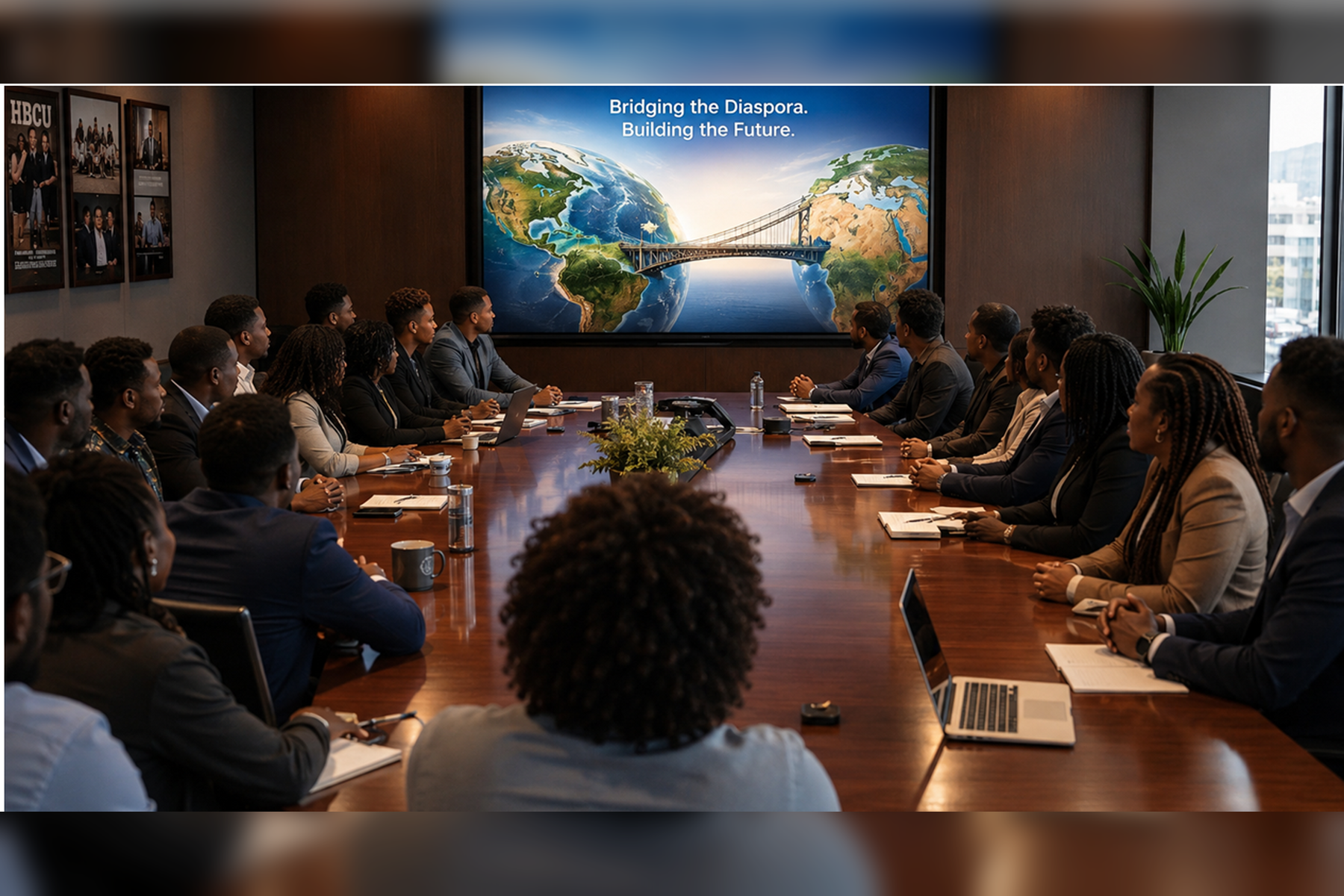
The partnership between NHBCUAAF and GDN Global represents more than organizational cooperation. It represents a recognition that the next phase of Black advancement may depend not only on preserving existing opportunities in America, but also on actively building new ones across the African diaspora.
For students searching for direction, alumni seeking renewed purpose, and communities looking for sustainable pathways forward, that vision may arrive at exactly the right time.
Closing CTA
Join the conversation—leave your take or a question.
Help grow The Economic Liberation of Africa conversation—forward to someone curious about Africa-centered economic pathways.
Donate to GDN – Greater Diversity News | Subscribe – Greater Diversity News
Excellent article Mr. Grear! Very detailed and thought provoking regarding the partnership of NHBCUAAF with GDN Global and getting all HBCU’s on board. The Economic Liberation of Africa should interest all of us, especially those who are invested in the changes that will affect the future of generations to come!
Thank you for laying out the details in such a straight forward manner. Looking forward to seeing the responses of others who want change to be set as a precedence and not just an option!
Thanks for your feedback, Mrs. Moore! And thanks for your awareness and concerns for the future of HBCU students, alumni, and friends and family and for the economic liberation of Africa!