
By Peter Grear, with AI assistance
June 10, 2026
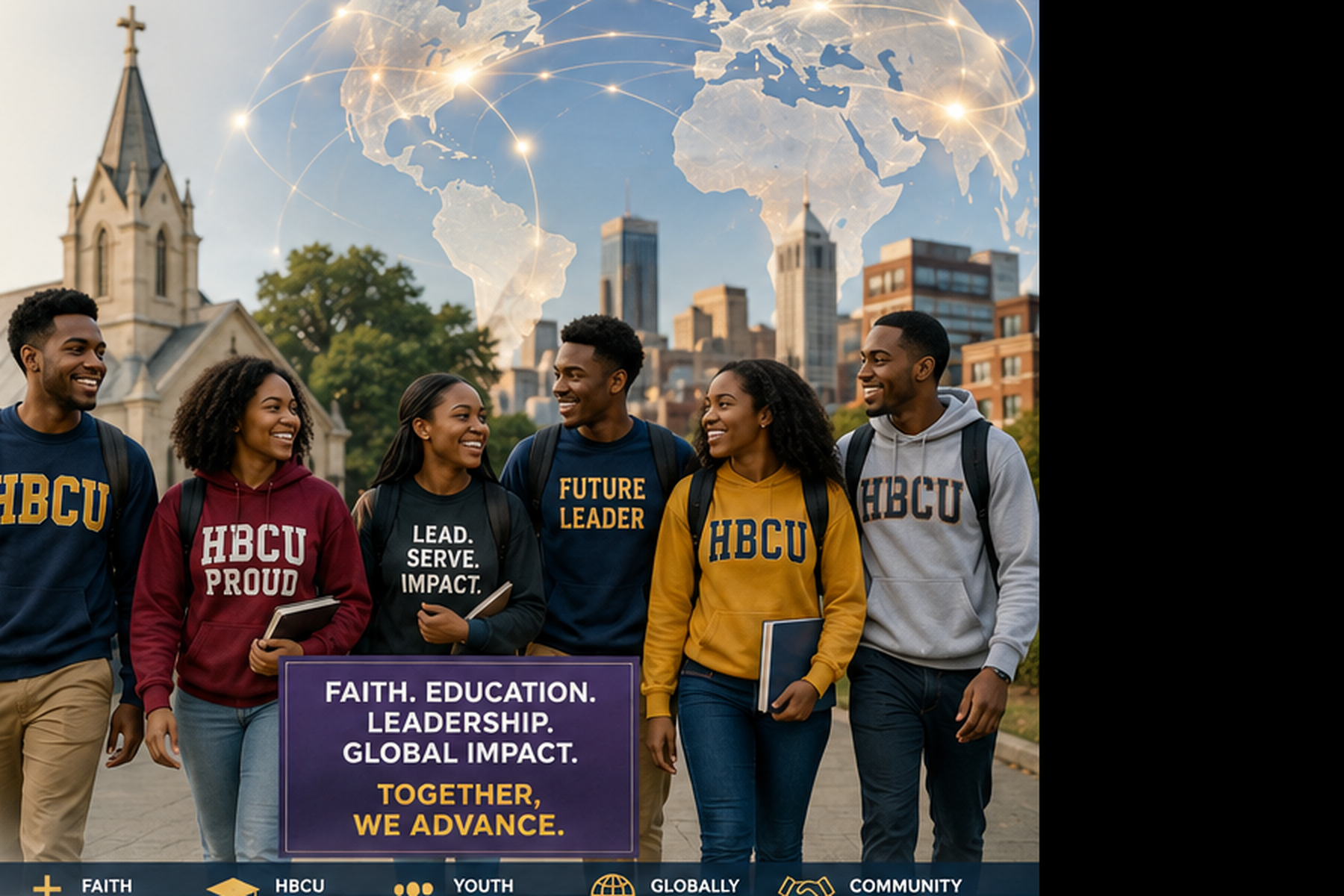
Featured image alt text: Faith leader, HBCU students, city skyline, church, and global map symbolizing faith community endorsement, education, and global Black advancement.
Faith communities have always been more than places of worship. In Black America, they have been schools of democracy, centers of service, protectors of dignity, voices for justice, and incubators of leadership. That is why the Faith Endorsers Resolution supporting the proposed NHBCUAAF–GDN Global partnership carries implications far beyond a statement of support. It invites churches, clergy, ministerial alliances, and faith-based organizations to help move a shared vision from paper to people.
At the heart of the resolution is a simple but powerful idea: HBCU students and alumni need community-rooted support as they prepare for leadership in a changing world. The partnership connects education, media development, mentorship, workforce pathways, Africa-centered engagement, the AU Sixth Region, and RoFR education. When the faith community endorses that mission, it adds moral authority, community trust, and organizing power.
This matters because endorsements shape public confidence. A resolution supported by respected faith leaders tells families, students, alumni, donors, and civic partners that the mission reflects values they already recognize: service, responsibility, stewardship, youth development, and collective advancement. It says this effort is not merely about programs. It is about preparing the next generation to lead with purpose.
Faith endorsement also expands the reach of the campaign. HBCU alumni associations are central to the mission, but the larger community of support extends far beyond alumni circles. Congregations include parents, grandparents, educators, business owners, retirees, students, civic workers, ministers, and donors. Many may not belong to an alumni association, but they care deeply about HBCUs, Black youth, community leadership, and the future of the African diaspora.
That broader reach is especially important for student engagement. Many young people are more likely to respond when an invitation comes through a trusted pastor, youth ministry, education committee, campus ministry, or community elder. A church can help identify students, share the resolution, host briefings, invite mentors, and encourage families to see global engagement as part of a student’s leadership preparation.
The resolution also turns endorsement into action. It does not require every faith institution to begin with a large financial commitment. A congregation can start by sharing information, hosting a short conversation after service, inviting a speaker, naming a student contact person, connecting alumni mentors, encouraging members to submit individual statements of support, or helping introduce the campaign to other faith-based organizations.
Small steps can produce large movement energy when they are repeated across congregations. One church can host a briefing. Another can identify student leaders. Another can introduce a business sponsor. Another can connect retired professionals willing to mentor. Another can share the campaign through its newsletter or social media. Together, these actions create visibility, credibility, and momentum.
Faith endorsement can also strengthen fundraising conversations. Donors and sponsors often want to know whether an initiative has trusted community backing. When churches and faith-based organizations publicly support the mission, they help demonstrate that the campaign is not an isolated project. It is a community-backed effort with spiritual, civic, educational, and global dimensions.
This is especially important because the partnership is not only local or national in scope. It is connected to a wider conversation about the Economic Liberation of Africa, the AU Sixth Region, and the role of the African diaspora in shaping future pathways for students, workers, entrepreneurs, and civic leaders. Faith institutions can help young people understand that their inheritance is not limited to local history. It also includes global responsibility.
The Black church has long helped communities interpret their place in history. It helped people understand freedom not only as a legal status, but as a moral and social assignment. Today, that same tradition can help HBCU students see global Black advancement as more than a theme. It can become a direction for study, service, entrepreneurship, media, public policy, technology, law, ministry, and civic life.
For GDN Global and NHBCUAAF, faith endorsement can help transform the partnership from an institutional proposal into a public movement. It can provide a bridge between alumni leadership and community leadership, between students and mentors, between local congregations and global issues, and between historic Black institutions and the emerging demands of a changing world.
The bottom line is clear: when faith communities endorse this resolution, they help carry the mission into the places where trust already lives. They help give the partnership moral credibility, expand its audience, support student recruitment, strengthen fundraising, and connect the historic role of the Black faith community to a modern agenda for HBCU students, alumni leadership, and global Black advancement.
This is the kind of endorsement that can do more than affirm an idea. It can activate a network. It can call elders, parents, students, pastors, alumni, and supporters into shared responsibility. It can remind the community that resolutions are strongest when they become relationships, and relationships are strongest when they become action.
Call to Action
Endorse the Resolution: Faith leaders, churches, ministerial alliances, and faith-based organizations are encouraged to review and endorse the Faith Endorsers Resolution in support of the NHBCUAAF–GDN Global partnership.
Share This Article: Forward this article to pastors, education ministries, HBCU alumni, student leaders, civic organizations, and community partners who may support this work.
Support GDN and GDN Global: Subscribe, donate, advertise, or partner with Greater Diversity News and GDN Global to help expand independent Black media, student engagement, and Africa-centered public education.
Join the Wider Movement: Support the Pan-African Podcast Network, ADDI, BGBN, and allied efforts that advance diaspora engagement, student pathways, and the Economic Liberation of Africa.
Leave a Comment: Add your reflections, questions, and suggestions so this conversation can continue across communities, campuses, congregations, and alumni networks.
Suggested image file: faith-community-endorsement-hbcu-global-advancement-3×2.png