
By Peter Grear, with AI Assistance
December 1, 2025
In every era of world history, global power has revolved around one fundamental question: Who sets the terms?
For centuries, Africa has been positioned as a resource well, not a negotiating partner. Its minerals, land, and people fueled the rise of global empires, yet it was rarely allowed to control how its wealth was used.
But imagine a different future.
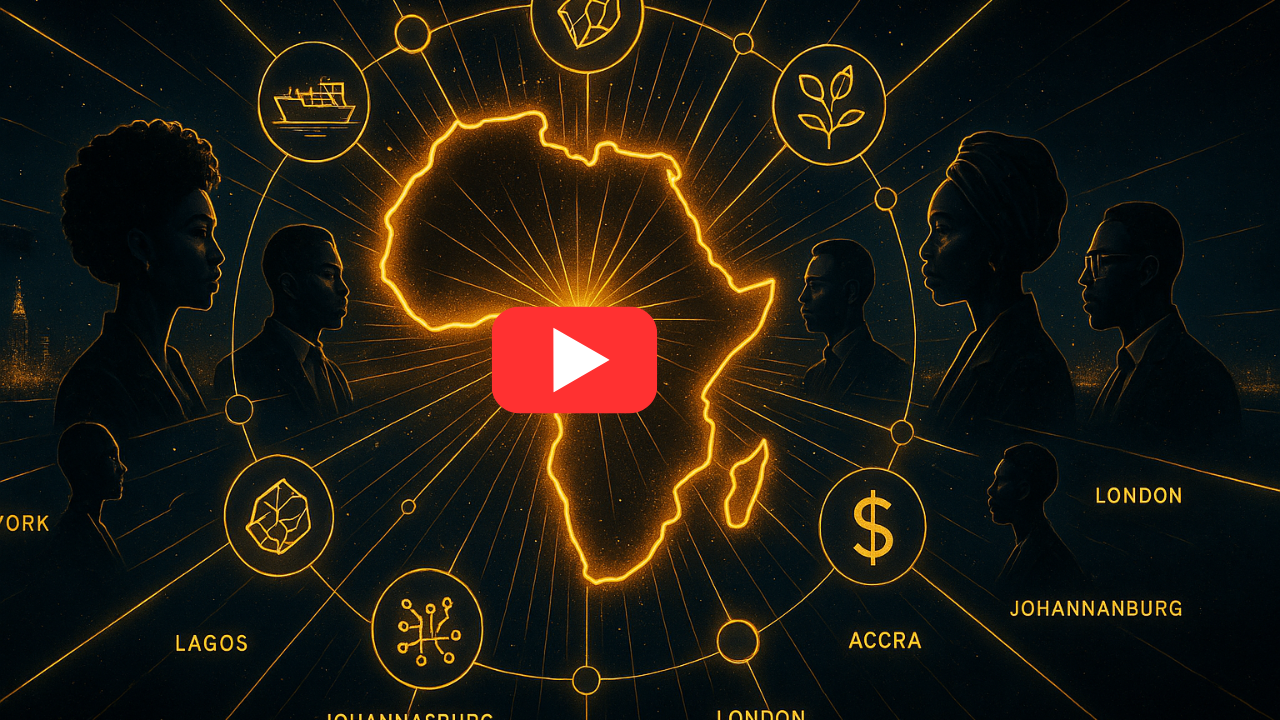
Imagine an African Union that formally adopts the Right of First Refusal (RoFR) as a continent-wide economic principle — requiring all foreign investors to offer deals to African governments, African businesses, and the African diaspora before approaching anyone else. Imagine a unified Sixth Region — the diaspora — legally positioned as Africa’s first-choice partner in all major contracts.
If this happens, the global economy would not simply “shift.”
It would be rewired at its core.
This article explores what that world would look like.
Africa Becomes the World’s Most Strategic Gatekeeper
RoFR changes a single thing — but it changes everything.
No foreign government, corporation, or billionaire can access African land, minerals, manufacturing, ports, or infrastructure until Africans and the diaspora have been given first priority. RoFR means Africa sets the standards, the timelines, the partnership rules, and the contract value.
Instead of competing against foreign capital, African and diaspora investors become the default first bidders.
The power dynamic flips:
- Multinationals must have African or diaspora partners.
- African institutions negotiate from strength, not desperation.
- Africa becomes an investment gatekeeper, not a passive supplier.
With RoFR, Africa becomes the world’s most important economic doorway — and the continent decides who walks through.
Diaspora Wealth and Power Surge
RoFR + Sixth Region recognition equals the most significant global wealth shift in Black history.
For the first time, African Americans, Afro-Caribbeans, Afro-Latinos, Black Europeans, and African immigrants are structurally prioritized for African investment opportunities. From housing and manufacturing to agriculture and tech, diaspora entrepreneurs receive first rights to invest before foreign nations can submit competing bids.
This unleashes a new financial reality:
- Diaspora capital accelerates into Africa.
- Diaspora-owned venture funds and cooperatives expand.
- Black wealth builds through transcontinental assets.
The diaspora stops being a consumer community. It becomes an ownership class with Pan-African reach.
Development Becomes Afrocentric and Self-Funded
RoFR doesn’t just shift contracts — it changes development models.
Under RoFR, Africa no longer designs projects around IMF conditions or donor priorities. Instead, the diaspora and African institutions co-fund initiatives aligned with African values and long-term needs.
That means development becomes:
- Youth-centered
- Innovation-focused
- Culturally grounded
- Sustainability-driven
- Controlled by Africans, not foreign lenders
Diaspora remittances — already over $100 billion annually — combine with RoFR-backed bonds and public-private partnerships to replace foreign aid dependency.
Africa becomes the architect of its own development.
Global Supply Chains Must Respect Africa’s Terms
Africa’s mineral wealth is foundational to the modern world:
- 60% of global cobalt
- 30% of global gold
- Over 70% of mobile-phone minerals
- Cocoa, coffee, rare earth metals, and lithium
- Vast agricultural potential
RoFR forces a reconstruction of global supply chains. Foreign nations must negotiate with African rules, not impose their own.
This sparks a transition from raw exports to:
- African-owned processing
- African-controlled manufacturing
- African intellectual property and brands
The world’s most essential materials can no longer be extracted without African and diaspora benefit.
Political Sovereignty Grows — A New Pan-African Bloc Emerges
With RoFR in place, political power naturally follows economic power.
Africa gains leverage in continental and global institutions — reshaping global geopolitics.
This leads to:
- Stronger AU central authority
- Momentum for Pan-African currency (AfriCoin)
- Reduced dependence on foreign militaries
- Stronger Afro-Caribbean alliances
- A rising global Black geopolitical bloc
Africa and its diaspora become co-authors of global policy, not subjects of it.
Conclusion: A Rebalanced World
If adopted by the African Union, RoFR would be the most transformative economic principle in modern African history. It would redirect wealth, power, and opportunity back to African hands — and redefine the relationship between Africa and the world.
The AU designed the Sixth Region to engage the diaspora.
RoFR operationalizes it.
The global economy will no longer run through Africa.
It will run with Africa, by Africa, and for Africans first.
Call to Action
Donate to GDN – Greater Diversity News | Subscribe – Greater Diversity News
Join the conversation — leave your take or a question.
Help grow The Economic Liberation of Africa conversation — forward to someone curious about Africa-centered opportunity.