
By Peter Grear, with AI assistance
Published: March 30, 2026
For much of the modern era, Africa was framed by the outside world as a recipient—of aid, of policy advice, of foreign intervention, and of development agendas designed elsewhere. That framing was never fully accurate, but it was politically useful. It allowed major powers to treat the continent as a space to manage rather than a force to negotiate with.
That era is ending.
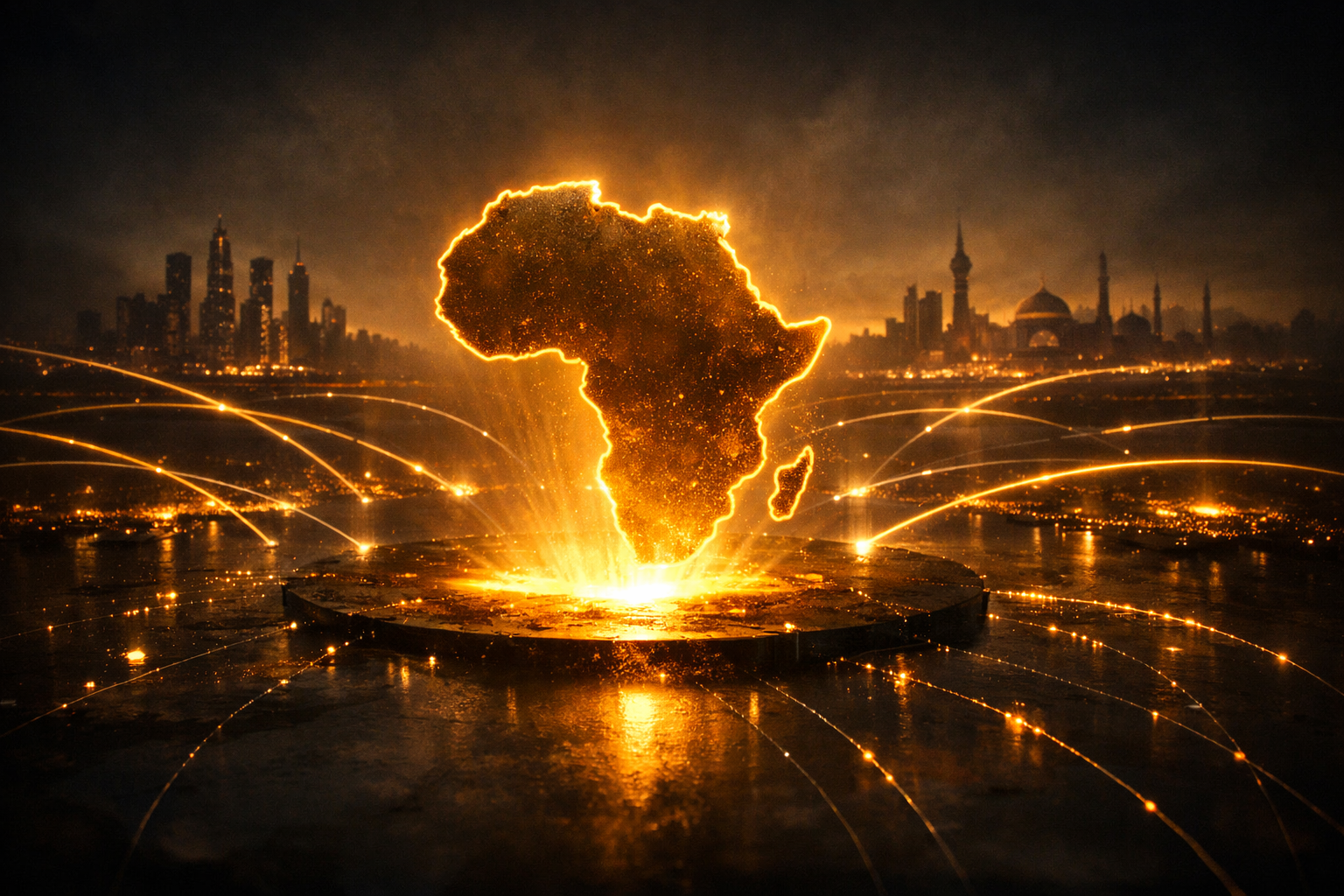
Africa is increasingly emerging not as a passive object in global affairs, but as a strategic actor in a multipolar world. As the United States, China, Russia, the Gulf states, India, Turkey, and the European Union compete for influence, the continent’s leverage is growing. Its markets matter. Its votes matter. Its minerals matter. Its trade routes matter. Its young population matters. And increasingly, its political choices matter.
This is what makes Africa’s rise different in the present moment. The continent is no longer simply being “included” in the global order. It is helping reshape it.
A multipolar world is one in which no single power can fully dominate international politics, trade, finance, and security. Instead, influence is distributed across several major centers. In such a world, strategic regions gain room to maneuver. Africa, with 54 countries, enormous natural resources, expanding urban markets, and a rising demographic profile, becomes one of the most important theaters of global negotiation.
That shift changes the terms of engagement.
For decades, Africa was approached through the language of charity and stabilization. Western powers often emphasized humanitarian support, governance reform, and poverty reduction while maintaining economic relationships structured around extraction and dependency. Many African states were expected to accept outside terms in exchange for financing, trade access, or security cooperation.
Today, that model faces increasing strain.
African governments now operate in an environment where they have more options. China offers infrastructure and financing. Gulf states bring capital and logistics partnerships. Russia seeks security relationships. India expands commercial ties. Turkey deepens diplomatic and construction footprints. BRICS has broadened the imagination of what non-Western alignment can look like. AfCFTA, though still developing, offers a continental framework for internal market integration.
This does not mean Africa has escaped dependency. Nor does it mean every new partner offers fair terms. But it does mean the negotiating field has widened. The presence of multiple suitors gives African states greater leverage than they had in a more tightly Western-dominated order.
Nowhere is this more obvious than in the politics of critical minerals.
Africa holds major reserves of cobalt, lithium, manganese, bauxite, copper, platinum, uranium, and rare earth-related resources essential to electric vehicles, battery storage, defense technologies, and the global energy transition. In a world racing toward decarbonization and digital expansion, these are not marginal assets. They are strategic foundations.
That reality shifts Africa’s position from peripheral supplier to central stakeholder.
The key question is whether African states will merely export raw materials under old models, or use their leverage to demand processing, value addition, local jobs, infrastructure, and ownership. The countries that succeed in doing the latter will help define a new era of African bargaining power.
Trade is also changing the equation.
The African Continental Free Trade Area represents more than a commercial agreement. It is a political statement that Africa’s future cannot remain permanently tied to fragmented colonial-era market structures. A continent with 1.4 billion people cannot fully rise while trading more easily with distant powers than with its own neighbors. AfCFTA is an attempt, however incomplete, to create scale, coordination, and internal resilience.
This matters in a multipolar world because power increasingly belongs to those who can organize markets, not merely open them.
Demographics add even more weight. Africa is the youngest continent on Earth. While much of the developed world faces aging populations and labor shortages, Africa’s youth population continues to expand. If paired with education, infrastructure, and industrial policy, this youth wave could become one of the most important economic forces of the century. If neglected, it could deepen instability. Either way, it guarantees that Africa will not remain geopolitically secondary.
Cultural power also matters more than many policymakers admit. African music, fashion, film, digital culture, and intellectual influence are expanding globally. That soft power does not replace economic strategy, but it strengthens global relevance. A continent that shapes imagination also shapes markets, alliances, and identity.
At the same time, Africa’s rise is not uniform. Some countries remain burdened by debt, conflict, corruption, weak infrastructure, and external interference. Political transitions can still be fragile. Resource wealth can still be captured by elites. Foreign partnerships can reproduce new forms of dependency under different branding.
But none of that cancels the larger trend.
Africa’s strategic value is rising because the global system itself is changing. In a world of multiple competing powers, Africa’s choices carry more weight. States that were once expected to align automatically with outside agendas can now bargain, delay, diversify, and reposition. That is what strategic agency looks like.
The deeper lesson is this: Africa should no longer be understood mainly through the lens of need. It must be understood through the lens of leverage.
The continent is not rising because the world has suddenly become generous. It is rising because global competition has made Africa too important to ignore—and because Africans themselves are increasingly insisting on different terms.
From aid recipient to strategic power broker is not just a slogan. It is the emerging political reality of a continent learning how to negotiate with a changing world on more equal ground.
This movement is for students and supporters who want more than awareness—they want a role in shaping opportunity.
Join the Movement
.
Get updates on internships, opportunities, and ways to participate in the Students, RoFR, and Jobs Pipeline initiative.
Help grow The Economic Liberation of Africa conversation—forward this article to someone ready to build.