By Peter Grear, with AI Assistance
February 11, 2026
For generations, the African diaspora has been described in emotional terms—heritage, identity, memory, return. But in the 21st century, the Sixth Region must be defined not only by culture, but by capital, commerce, and coordinated power.
The African Union’s recognition of the diaspora as Africa’s Sixth Region created a political and symbolic bridge. What remains unfinished is the economic architecture. If the Sixth Region is to move from sentiment to structure, it must build something durable: a diaspora wealth ecosystem.
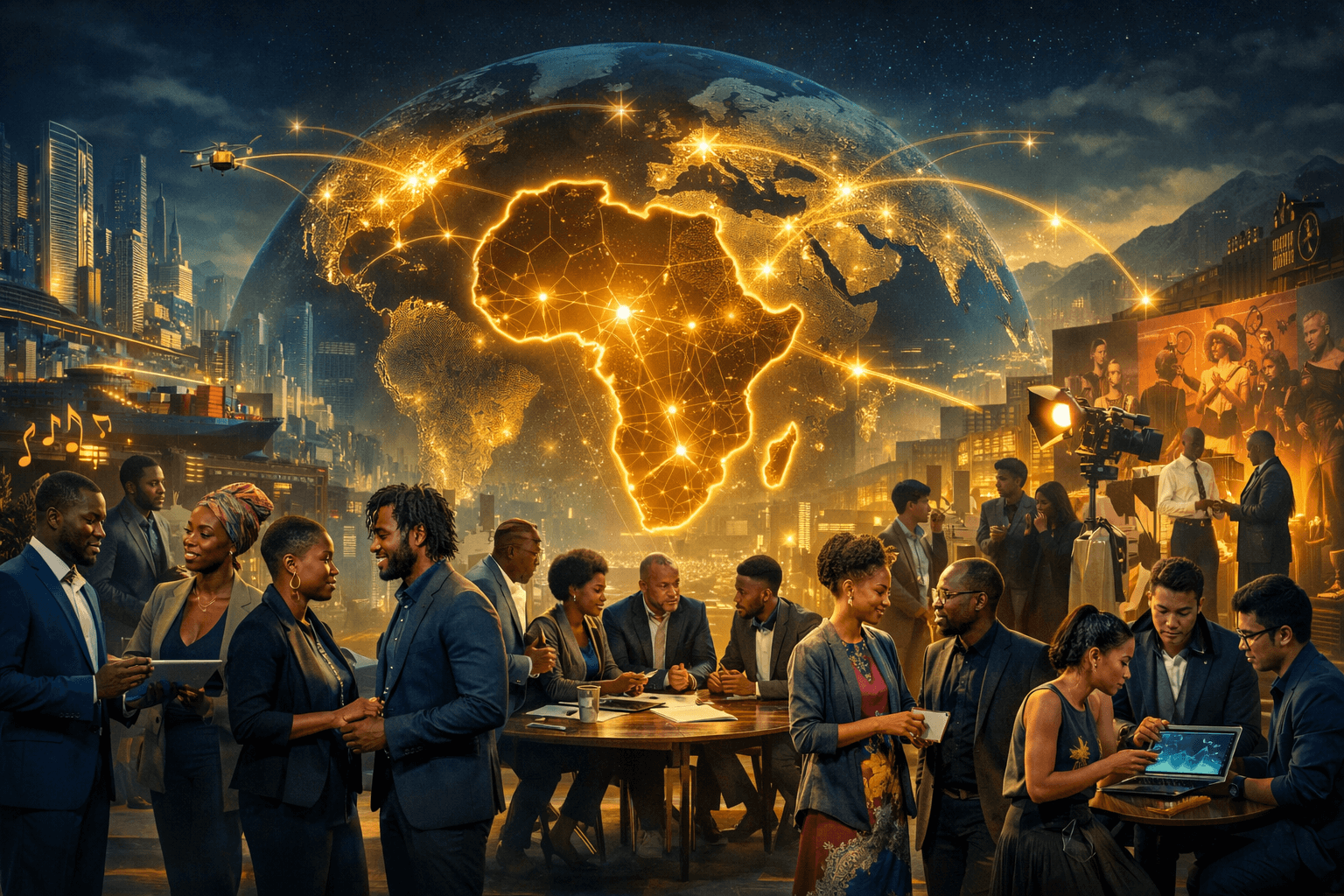
That ecosystem rests on three pillars—commerce, culture, and community—and each must function together.
Commerce: From Remittance to Ownership
The diaspora already moves billions of dollars annually through remittances. Yet remittances alone do not create structural power. They relieve pressure, but they rarely generate scalable ownership.
A wealth ecosystem requires a shift:
- From remittance to investment
- From consumption to production
- From individual transfers to pooled capital
- From informal support to institutional coordination
Commerce in the Sixth Region must mean more than buying land or funding a relative’s business. It must include:
- Diaspora venture capital pools
- Cross-border business consortiums
- Youth-led startup accelerators
- Diaspora chambers of commerce aligned with African markets
- Procurement frameworks that prioritize African and diaspora firms
This is where policy tools like the Right of First Refusal (RoFR) become essential. RoFR provides structural access to opportunity. But access only matters if diaspora capital is organized and ready.
A wealth ecosystem ensures that when opportunities emerge, the Sixth Region can respond collectively—not sporadically.
Culture: The Invisible Infrastructure of Wealth
Culture is often treated as soft power. In reality, it is economic infrastructure.
Music, fashion, film, language, and digital content have already built transcontinental bridges between Africa and its diaspora. Afrobeats, Nollywood, global Black design aesthetics—these are not just artistic movements; they are economic signals.
Culture does three critical things for the wealth ecosystem:
- Builds trust across borders
- Creates shared identity and loyalty
- Attracts global capital and visibility
When a diaspora entrepreneur in Atlanta collaborates with a tech founder in Nairobi, culture reduces friction. When a creative industry professional in London partners with a producer in Lagos, shared identity accelerates collaboration.
The Sixth Region’s cultural coherence is not ornamental—it is strategic.
If properly leveraged, culture fuels tourism, media exports, digital platforms, creative hubs, and global brand partnerships. It draws the world toward African innovation while strengthening internal networks.
Commerce without culture is transactional.
Culture without commerce is incomplete.
The Sixth Region requires both.
Community: The Coordination Layer
Commerce builds wealth. Culture builds connection. Community builds durability.
The Sixth Region cannot function as isolated success stories. It must function as a networked system. That means building community structures that coordinate activity:
- Pan-African youth networks
- Diaspora business alliances
- Shared data platforms
- Education and mentorship pipelines
- Policy forums that include diaspora voices
Community ensures that gains are not temporary. It transforms one-time projects into sustained ecosystems.
Importantly, community also protects against fragmentation. The diaspora spans continents, languages, and political systems. Without intentional coordination, efforts remain scattered.
A true wealth ecosystem aligns:
- Africa-based entrepreneurs
- Diaspora professionals
- Youth innovators
- Cultural creators
- Policy advocates
Not under a single institution, but through shared objectives and recurring collaboration.
Why This Moment Is Different
Global corporations are increasing their engagement with Africa. Strategic minerals, digital infrastructure, and growing markets are drawing intense interest. If the Sixth Region does not organize economically, it risks once again being adjacent to growth without participating in ownership.
But this time, the diaspora has advantages previous generations did not:
- Digital connectivity
- Cross-border payment systems
- Global professional networks
- Youth-led innovation ecosystems
- Institutional recognition under the AU
The question is not whether the Sixth Region has potential. The question is whether it will build systems equal to its scale.
The Path Forward
Building a diaspora wealth ecosystem requires deliberate action:
- Organize capital through diaspora investment coalitions.
- Strengthen cultural industries as economic bridges.
- Formalize community networks into durable platforms.
- Advocate structural access through policies like RoFR.
- Engage youth intentionally as co-builders, not observers.
This is not about charity. It is about coordination.
The Sixth Region was created to unify Africa and its global family. Unity, however, must express itself economically to endure.
Commerce provides leverage.
Culture provides cohesion.
Community provides continuity.
Together, they form the foundation of a diaspora wealth ecosystem capable of shaping Africa’s rise—not merely witnessing it.
Call to Action
Donate to GDN – Greater Diversity News | Subscribe – Greater Diversity News
Join the conversation—leave your take or a question.
Help grow The Economic Liberation of Africa conversation—forward to someone curious about Africa-centered opportunity.