
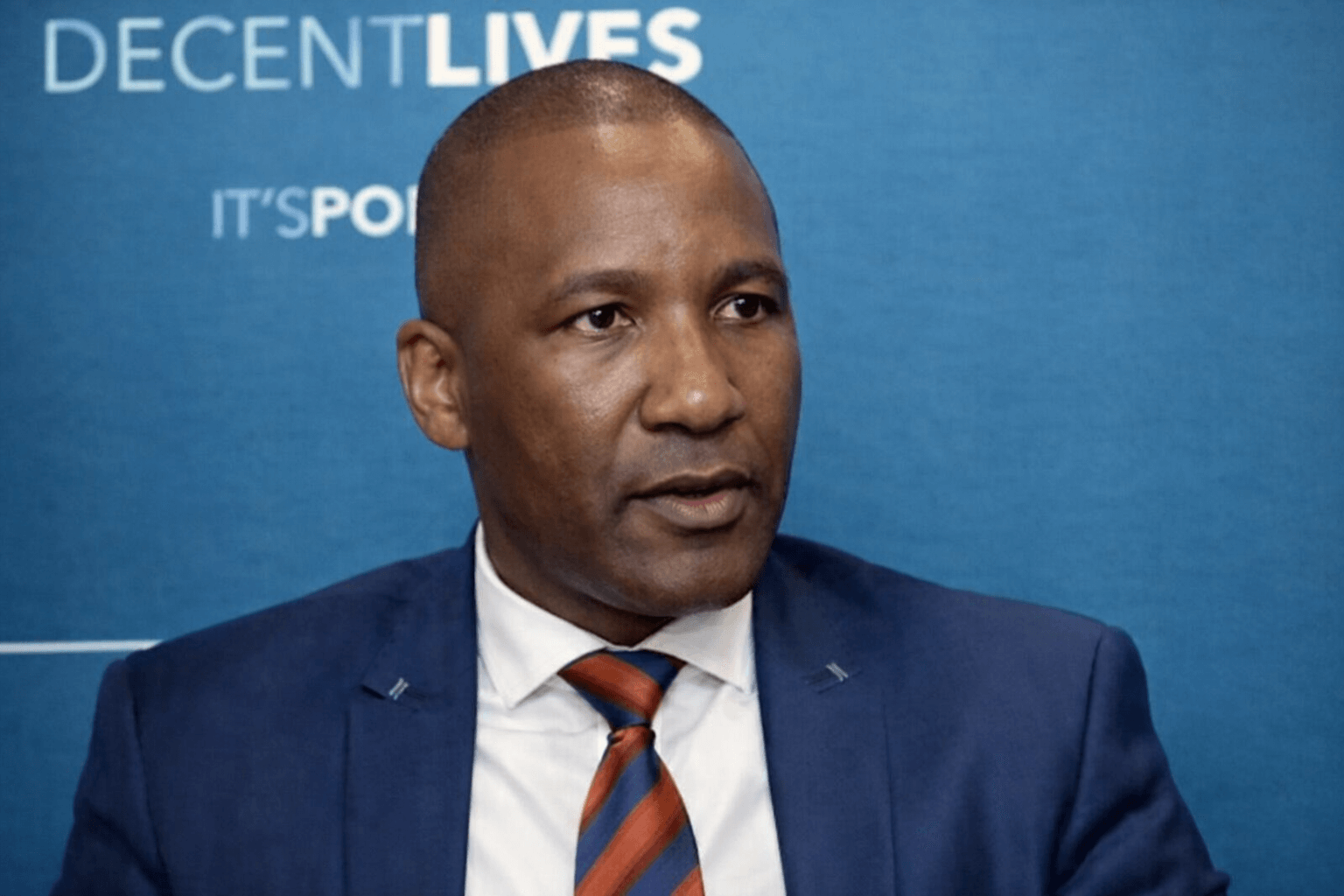
By Peter Grear, Greater Diversity News (GDN Global)
With AI assistance
February 9, 2026
For decades, Botswana has been celebrated in Western policy circles as a model of African stability—orderly elections, fiscal discipline, and a cooperative relationship with global capital. Yet stability, as critics increasingly argue, can also function as a cage. Few African political figures have interrogated this contradiction more rigorously than Duma Boko, a lawyer, constitutional thinker, and long-time opposition leader whose ideas now resonate far beyond his country’s borders.
Boko’s significance is not rooted solely in electoral politics. It lies in his willingness to challenge the geopolitical assumptions underpinning Africa’s post-independence order—assumptions that prize predictability over sovereignty, and compliance over self-determination.
Botswana as a Case Study in Managed Democracy
Since independence, Botswana has been governed by a single dominant party. International institutions have long pointed to this continuity as evidence of good governance. Yet Boko has persistently questioned what this “success” actually delivers to ordinary citizens.
Diamonds fueled growth, but not transformation. Inequality deepened alongside macroeconomic praise. Political alternation remained theoretical. For Boko, Botswana exemplifies a broader African dilemma: democratic form without democratic leverage.
As president of the Botswana National Front (BNF) and a key leader within the Umbrella for Democratic Change (UDC), Boko helped consolidate opposition forces into a credible alternative. More importantly, he reframed opposition politics from protest to philosophy—arguing that democracy must be judged by outcomes, not rituals.
Law, Sovereignty, and the Colonial Blueprint
Boko’s background as a constitutional lawyer shapes his worldview. He frequently argues that African states inherited legal systems designed to extract compliance, not empower citizens. Independence transferred authority, but not architecture.
This critique has direct geopolitical implications. Constitutions modeled on colonial governance structures, Boko contends, make African states legible and manageable to external powers—while limiting their ability to pursue independent economic or diplomatic strategies.
In a multipolar era, where Africa is once again the object of global competition—between the United States, Europe, China, Russia, and Gulf states—Boko’s argument cuts sharply: sovereignty cannot be negotiated through aid frameworks or security partnerships alone. It must be structurally embedded.
A Direct Challenge to Neoliberal Orthodoxy
Unlike many African opposition figures who calibrate their rhetoric for Western donors, Boko is openly critical of neoliberal economic orthodoxy. He rejects the idea that foreign investment, absent local control, constitutes development. He questions growth metrics that coexist with mass precarity.
This positions him within a wider Global South realignment. Across Africa, Latin America, and parts of Asia, political leaders and movements are reassessing the costs of dependency. Boko’s critique aligns with this shift—not through alignment with any single bloc, but through insistence on African agency.
He is skeptical of aid models that substitute charity for justice and wary of security arrangements that trade sovereignty for stability. In this sense, Boko represents a distinctly intellectual form of resistance—one that seeks leverage, not isolation.
Why Boko Resonates in a Multipolar Moment
Boko’s rising international profile reflects a generational and geopolitical turning point. African youth, more globally connected and historically conscious than previous generations, increasingly reject narratives that frame Africa as perpetually “emerging.”
They ask sharper questions: Who controls resources? Who sets terms? Who benefits from stability?
Boko speaks directly to this consciousness. He does not romanticize revolution or promise salvation through strongman politics. Instead, he calls for democratic systems capable of defending national and popular interests in a competitive global order.
This makes him legible to diaspora audiences as well—particularly those engaged in debates about Africa’s role in reshaping global trade, labor flows, and capital formation.
Beyond Electoral Outcomes
Whether or not Boko ever leads a government, his impact is already evident in how political debate is shifting. He has helped normalize conversations about elite capture, constitutional reform, and economic sovereignty in a country once defined by political quietude.
More broadly, he represents a model of African leadership that does not seek validation through proximity to Western power. His politics are not anti-global; they are anti-subordination.
In an era defined by strategic minerals, demographic power, and renewed competition for Africa’s resources and alliances, voices like Boko’s matter. They remind the world that Africa is not merely choosing partners—it is renegotiating terms.
The question he poses is not whether Africa will participate in the global order, but on whose conditions.
Support Independent Global Black Journalism
Donate to GDN – Greater Diversity News
Subscribe – Greater Diversity News
Join the conversation—leave your take or a question.
Help grow The Economic Liberation of Africa conversation—forward this to someone curious about Africa-centered opportunity.