
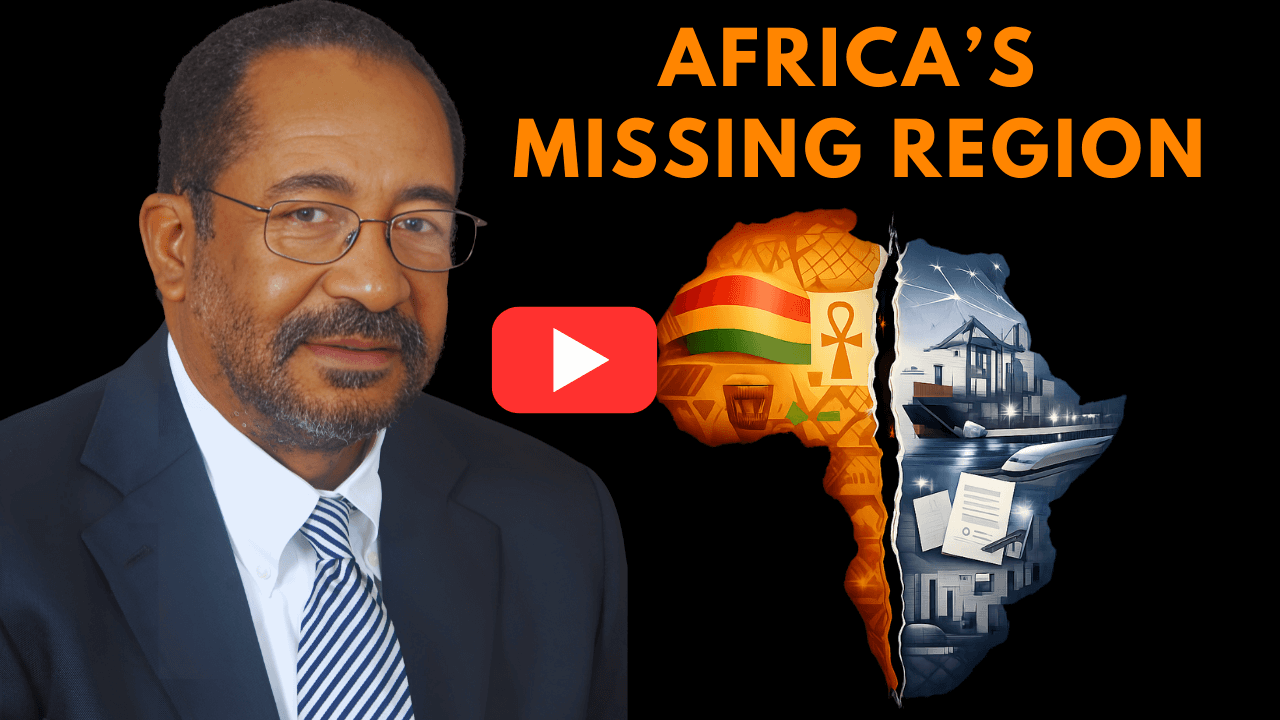
By Peter Grear, with AI assistance
December 22, 2025
This is not a pitch. It is not a fundraising appeal. And it is not a request for blind endorsement. What follows is an invitation—one that is intentionally public, deliberately open, and rooted in scrutiny rather than slogans.
At a moment when Africa’s global positioning is undergoing profound change, the question of who is included in the continent’s economic future has become unavoidable. Across Africa, governments are asserting greater sovereignty over resources, security, trade, and development pathways. Yet at the same time, Africa’s global diaspora—more than 200 million people worldwide—remains largely excluded from formal economic participation in those decisions .
That contradiction matters. Symbolic inclusion without economic mechanisms is not inclusion at all. It is ceremony. And ceremony does not build industries, supply chains, or shared prosperity.
The Sixth Region: Recognized, But Not Integrated
The Sixth Region of the African Union is not a new idea. The AU formally recognizes the African diaspora as its Sixth Region, alongside the continent’s five geographic regions. This recognition carries powerful cultural and historical meaning. But recognition alone does not equal integration.
Today, the Sixth Region is treated primarily as aspirational rather than structural. There are no standardized procurement pathways. There is no guaranteed access to public economic opportunities. There is no formal economic role that matches the language of inclusion. The gap between recognition and reality remains wide.
This leads to a fundamental policy question: is the Sixth Region meant to be symbolic—or structural?
Africa already uses policy to shape economic outcomes. Governments prioritize local firms. They negotiate strategic partnerships. They design procurement systems with intention. Policy always influences markets. The real issue is not whether policy shapes outcomes, but whose interests policy is designed to include.
At present, the African diaspora exists outside the continent’s largest public economic decisions.
Introducing the Right of First Refusal Movement
This is where the Right of First Refusal (RoFR) Movement enters the conversation. RoFR is not a business, not a private consortium, and not a closed network. It is a public policy proposal.
Under this framework, qualified diaspora-linked enterprises would be granted the first opportunity to match or compete for substantial public contracts before those contracts are finalized by public bodies across Africa.
RoFR does not eliminate competition.
It does not exclude local firms.
It does not ban international participation.
What it does is prevent automatic exclusion.
The core question RoFR raises is straightforward and structural: if the African diaspora is formally recognized as part of Africa, why is it excluded from Africa’s public procurement systems?
This is not an emotional argument. It is an institutional one—and it deserves serious analysis by economists, legal scholars, journalists, and policy thinkers willing to engage honestly.
An Invitation to Examine—Not Endorse
This project is not asking for promotion. It is asking for examination.
Podcasters, investigative journalists, African and diaspora chambers of commerce, development economists, student organizers, and Pan-African networks are invited to evaluate this framework publicly. Critique it. Stress-test it. Compare it to global precedents. Identify risks, limitations, and opportunities.
Constructive engagement could include:
- Case studies where RoFR might have changed past outcomes
- Legal and constitutional feasibility analyses
- Comparative reviews of similar mechanisms used globally
- Interviews with both supporters and skeptics
No editorial control is being requested. No endorsement is required. Only serious engagement.
Silence preserves the status quo. Public debate shapes outcomes.
Why This Belongs in the Public Square
Strong ideas do not need protection. They need scrutiny. If the Sixth Region of the African Union and the Right of First Refusal Movement are structurally sound, they will endure examination. If they are not, they should not advance.
Either way, the conversation belongs in public.
GDN Global serves as a public information hub for this work—not as an authority demanding agreement, but as a clearinghouse for documentation, policy briefs, and ongoing analysis. Its role is to support informed debate, not to dictate conclusions.
A Call to Engage
Readers are encouraged to engage directly:
- Use the comments to name podcasters or journalists who should examine this framework
- Tag producers and scholars who influence public policy debates
- If you host a podcast or platform, consider dedicating an episode to public evaluation
The future of Africa’s global economic integration will not be shaped behind closed doors. It will be shaped by rigorous public discourse.
Examine this in public. Question it. Debate it. And help move the conversation from symbolism to structure.
Join the conversation—leave your take or a question.
Help grow The Economic Liberation of Africa conversation—forward to someone curious about Africa-centered opportunity.
Donate to GDN – Greater Diversity News | Subscribe – Greater Diversity News