
By Peter Grear, with AI Assistance
Published: December 3, 2025
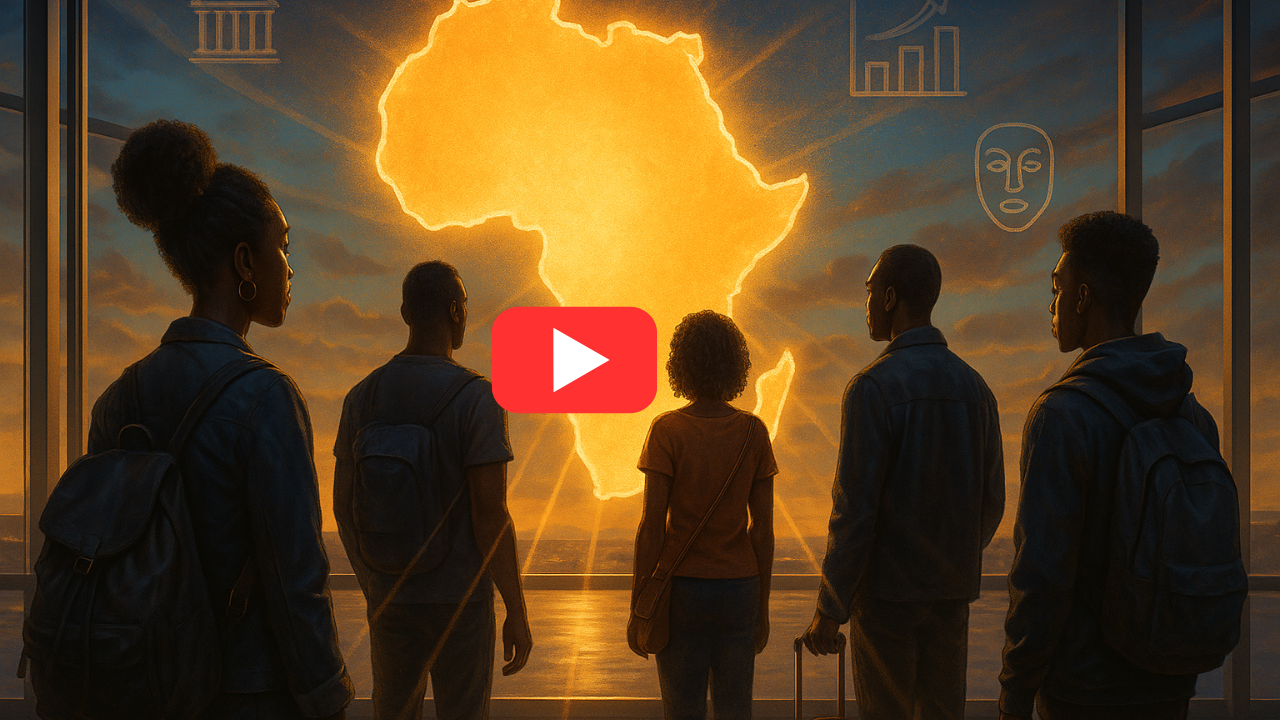
For Africans in the diaspora, the idea of “returning home” has always occupied a powerful place in collective memory. The dream is steeped in heritage, identity, and the hope of reconnecting with land and culture. Yet for many, the emotional desire to return clashes with a complicated and sometimes painful reality. As the African Union advances its Sixth Region agenda and platforms like GDN Global rise to connect Africa and its diaspora, it is time to confront the question honestly: What truly stops Africans abroad from going home?
A recent episode of Talk Africa addresses this question head-on, revealing that the factors discouraging diaspora return are not about lack of love for the continent—but about the structural barriers that still stand in the way. As one commentator put it, “The desire to return is strong. The systems supporting return are weak.”
To understand this dilemma, we must begin with governance. For many in the diaspora, political instability, corruption, and inconsistent rule of law create uncertainty. Even those eager to build businesses or invest often feel unprotected by institutional systems that should safeguard contracts, land titles, or intellectual property. Without reliability, investors hesitate. Without trust, communities stay away.
Infrastructure is another recurring barrier. From electricity and water reliability to road systems, internet connectivity, and healthcare, many diaspora members accustomed to stable public services worry about their quality of life if they relocate. These concerns are practical, not judgmental; they reflect the gap between aspiration and lived experience.
Economic opportunity is a double-edged sword. Africa’s growth is undeniable—tech hubs surging in Kenya, Ghana, Nigeria, Senegal, and Rwanda; manufacturing corridors emerging in Ethiopia and Egypt; mining and agricultural revolutions accelerating across the Sahel. But diaspora members fear returning without clear, stable job markets or predictable business environments. Many see opportunity but lack the information, networks, or governmental support systems that would make the leap realistic.
The cultural and social barriers may be even harder to navigate. Many diaspora Africans report feeling like outsiders when they visit or attempt to return. They may speak differently, carry Western expectations, or struggle with identity gaps that create friction. Some face suspicion—seen as privileged, disconnected, or financially obligated to extended families. Others simply feel unanchored, caught between worlds.
Then there are bureaucratic challenges: dual citizenship complexities, property acquisition hurdles, legal ambiguities, and administrative delays. A diaspora entrepreneur may be globally competitive—but at home, simple paperwork might take months.
And yet, despite these challenges, the pull toward Africa remains profound. The continent represents possibility: cultural connection, community, creativity, and global Black empowerment. Africa’s economic resurgence—bolstered by AfCFTA, rapid urbanization, digital transformation, and a young population—makes it one of the most promising investment frontiers in the world. The emotional return home is evolving into a viable economic one—but only if the path is made clear.
This is where the African Union’s Sixth Region vision becomes essential. By recognizing the diaspora as a formal part of Africa’s future, the AU acknowledges both the barriers and the potential. But recognition alone is not enough. The Sixth Region must be backed by structural reforms that make return—not just emotionally meaningful—but economically sound, socially supported, and institutionally protected.
Platforms like GDN Global have a critical role in building this bridge. By sharing stories, highlighting opportunities, showcasing diaspora successes, and exposing bureaucratic barriers, media can help shape a return narrative that is honest, empowering, and actionable. And by linking RoFR (Right of First Refusal) principles to diaspora investment, Africa can position its global family as preferred partners—reducing friction and increasing trust.
The truth is simple: Africa needs its diaspora, and the diaspora needs Africa. But the return home must be paved with policy, not poetry; systems, not slogans. If the Sixth Region is to thrive, Africa must welcome its global children not just with open arms—but with open institutions.
Call to Action
Donate to GDN – Greater Diversity News | Subscribe – Greater Diversity News
Join the conversation — leave your take or a question.
Help grow The Economic Liberation of Africa conversation — forward to someone curious about Africa-centered opportunity.