 When formal systems move slowly, media can do more than report the gap. It can help assemble the people, language, and momentum needed to close it.
By Peter Grear, with AI assistance
Published April 17, 2026
Institutions often move after the need is already obvious.
Universities take time to redesign programs. Employers move cautiously before creating new pipelines. Foundations want proof before they fund. Public agencies wait for consensus, structure, and policy language. By the time many institutions respond, a generation may already have spent years waiting for pathways that should have existed earlier.
That is why media matters more than many people realize.
Media is often treated as commentary, amplification, or storytelling after the fact. But in moments of transition, media can do something more powerful. It can help organize a workforce movement before formal institutions catch up. It can name the problem, gather the participants, shape the language, create visibility, and begin linking people to opportunity even before the larger systems are fully built.
That is especially important in the context of The Economic Liberation of Africa, the Sixth Region, and Right of First Refusal (RoFR).
One of the deepest problems facing Black students and diaspora professionals is not simply a lack of talent. It is a lack of organized connection. There are students with skills, graduates looking for meaningful work, employers searching for talent, Africa-linked sectors expanding, and diaspora networks talking more openly about opportunity than at any point in recent memory. Yet these pieces often remain disconnected from one another. The need is real, but the bridge is weak.
This is where media can become infrastructure.
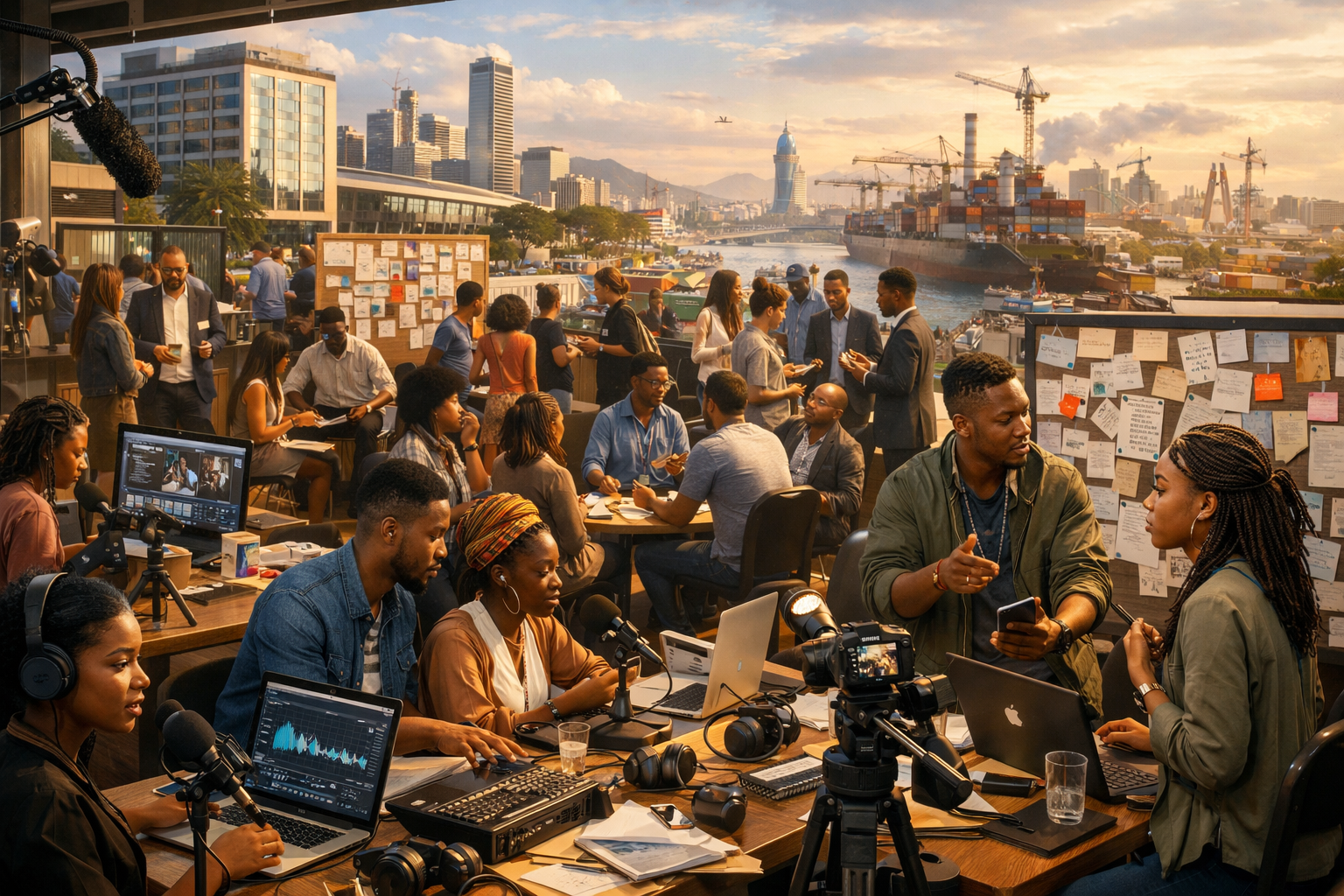
A platform like GDN Global is not limited to publishing opinions about what should happen. It can help create the conditions that make new workforce systems possible. Through consistent reporting, interviews, explainers, student features, employer outreach, newsletters, podcasts, and campaign framing, media can begin aligning the people who need each other before a university, chamber, government office, or philanthropic institution has fully organized the field.
That alignment matters.
A workforce movement does not begin only when jobs are posted. It begins when a constituency starts to recognize itself. Students have to see that they are not isolated individuals competing alone. Employers have to see that there is a coherent talent community worth engaging. Institutions have to see that the demand is not abstract. Partners have to see that there is public energy behind the idea. Media helps produce that recognition.
It gives a scattered population a shared language.
That may be one of the most important functions GDN Global can serve. Before people can rally around a jobs and opportunities pipeline, they need language that explains why the pipeline matters. They need to understand that Africa-centered opportunity is not just for specialists, diplomats, or elite investors. They need to hear that Black students and diaspora youth should not be the last to prepare for, hear about, or benefit from Africa-linked growth. They need a narrative that connects jobs, internships, ownership, procurement, and global Black participation into one clear mission.
Media can build that mission in public.
It can also lower the cost of organizing. A university may not be ready to launch a new center. A donor may not yet be ready to fund a major initiative. An employer may not yet be prepared to build a full program. But all of them are more likely to move once a media platform has already made the issue visible, credible, and hard to ignore.
In that sense, media does not replace institutions. It prepares the ground beneath them.
This is particularly relevant for a student-centered workforce strategy. Young people often respond first to language, identity, and visible possibility before they respond to formal systems. A student may not immediately join a technical procurement workshop. But that same student may engage a powerful article, a campus feature, a podcast conversation, a student spotlight, or a call to be part of a larger Sixth Region opportunity movement. Media can therefore bring people into the room before institutions know how to design the room itself.
That is leverage.
For GDN Global, the opportunity is to act not merely as a publisher, but as a movement convener. It can identify sectors where opportunity is growing. It can spotlight students preparing to enter those sectors. It can present employers as partners in a larger Black global development story. It can translate RoFR into student-friendly language—first readiness, first access, first participation. It can make clear that a jobs pipeline is not only about placement, but about building long-term capacity that leads toward ownership and enterprise creation.
In doing so, media starts to organize the market.
That phrase matters. Too often, media is imagined as standing outside the economy, observing it. But when media consistently introduces employers to talent, students to opportunity, institutions to public demand, and movements to practical pathways, it is helping organize economic behavior. It is helping define who sees whom, who hears what, and which opportunities become legible to which communities.
That is already a form of power.
Of course, media-led organizing also has limits. Visibility is not the same as structure. Inspiration is not the same as placement. A platform can rally attention faster than it can deliver institutional-scale outcomes. That is why a workforce movement built through media must keep pressing toward deeper forms of organization: sign-up systems, internship tracks, training pathways, employer partnerships, campus ambassadors, student cohorts, and eventually business formation and supplier development.
But none of that deeper structure appears from nowhere.
Before a pipeline becomes formal, it is often first cultural. Before it becomes funded, it is first narrated. Before it becomes institutional, it is first imagined and assembled in public. Media is where much of that early assembly happens.
That is why GDN Global’s role is so important. With its articles, newsletters, print publication, podcast, website, and YouTube platform, it has the ability to do what many institutions cannot do quickly: connect urgency to audience. It can tell students they belong in the future being discussed. It can tell employers there is talent ready to be cultivated. It can tell institutions that the demand is already forming. And it can tell the broader public that workforce development in the Black world should not be an afterthought to Africa’s rise, but one of its central pillars.
A movement like that will not be built all at once.
But it can be built issue by issue, story by story, campus by campus, partner by partner, and cohort by cohort.
That is how media helps a workforce movement begin before formal systems are fully ready. It sees the gap early, names it clearly, gathers the people most affected, and starts building the bridge in public view.
And sometimes that is exactly what must happen first.
This movement is for students and supporters who want more than awareness—they want a role in shaping opportunity.
Join the Movement
.
Get updates on internships, opportunities, and ways to participate in the Students, RoFR, and Jobs Pipeline initiative.
Help grow The Economic Liberation of Africa conversation—forward this article to someone ready to build.