
By Peter Grear, with AI assistance
Published: April 17, 2026
For generations, the relationship between Africa and its diaspora was framed mainly through memory, culture, and loss. The connection was emotional, historical, and spiritual—but too often disconnected from structured economic power. Today, that is beginning to change.
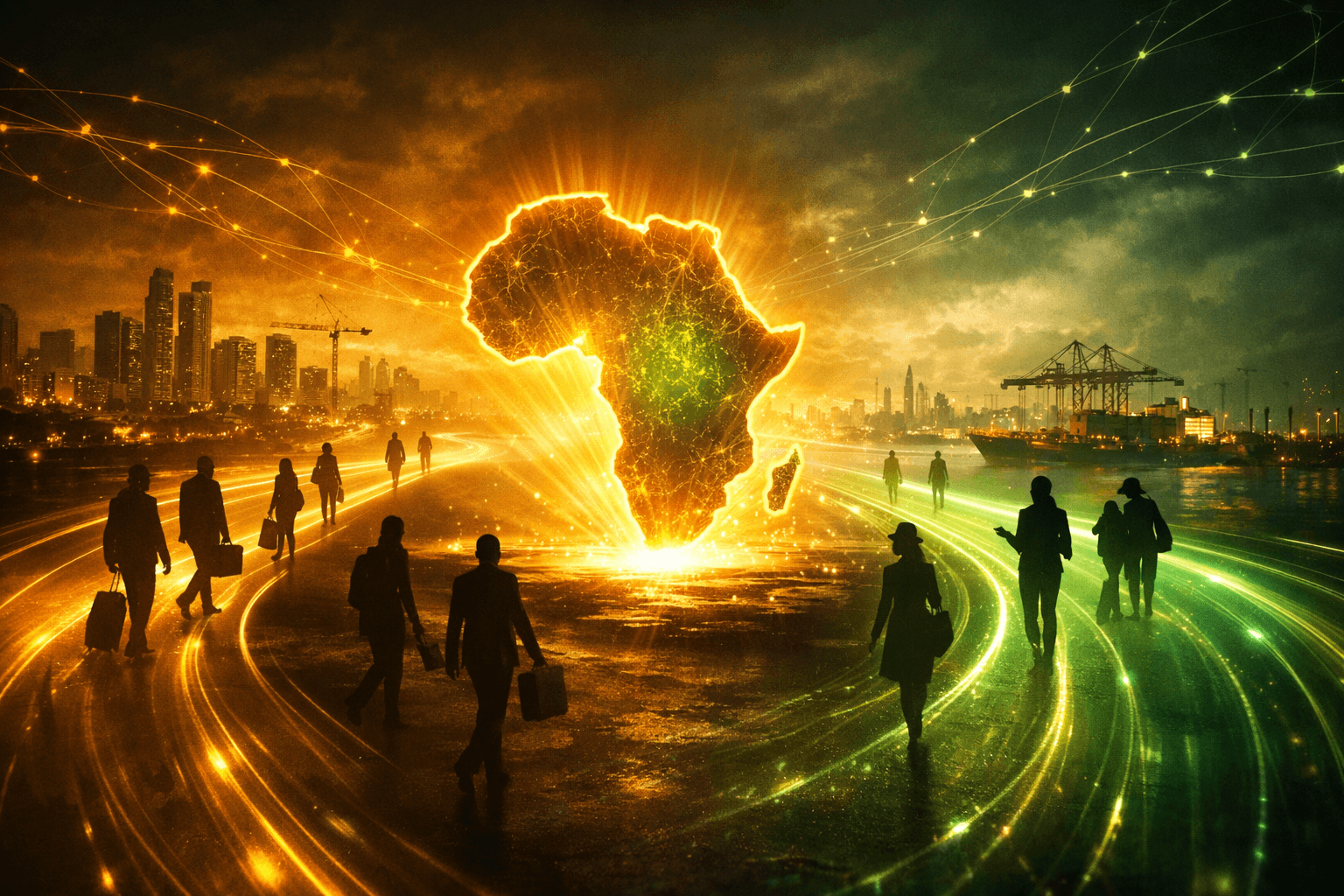
A new reality is emerging: as Africa rises in a multipolar world, the diaspora is no longer looking at the continent only as a place of origin. Increasingly, it is being viewed as a place of opportunity, strategy, investment, partnership, and long-term future. This shift is helping awaken one of the most important underused forces in global Black development: the African Union’s Sixth Region.
The Sixth Region refers to the global African diaspora—people of African descent living outside the continent who retain cultural, historical, or political ties to Africa. For years, the concept carried symbolic importance. It acknowledged that Africa’s story did not end at the shoreline. It recognized that the descendants of displacement, migration, and global Black struggle still belonged within Africa’s broader destiny.
But in the 21st century, the Sixth Region is becoming more than symbolic. It is becoming economic.
This change is being driven by two converging realities. First, Africa itself is changing. Across the continent, there is expanding interest in industrialization, infrastructure, trade integration, digital innovation, and strategic sovereignty. AfCFTA is pushing the idea of a more connected continental market. African cities are growing. Tech ecosystems are maturing. Resource politics are shifting. Global powers are competing more aggressively for influence and access.
Second, diaspora communities are changing how they think about Africa. For decades, many in the diaspora were taught to view the continent through the language of instability, distance, or charity. Today, a different lens is gaining ground. Africa is increasingly seen as a rising strategic space—one that offers room for entrepreneurship, policy collaboration, cultural exchange, remote work, tourism, investment, and institution-building.
This is not a simple return. It is a recalibration.
The diaspora is reconnecting through multiple channels. Some are financial. Remittances remain one of the clearest examples of diaspora impact, but a broader shift is underway beyond family support. More diaspora professionals are exploring startup partnerships, real estate, trade, manufacturing, education ventures, consulting, and media collaboration connected to Africa’s growth.
Some pathways are intellectual. The rise of Pan-African digital media, online seminars, podcasts, conferences, and youth forums has created new spaces where Africans on the continent and in the diaspora can think together in real time. These platforms are helping transform Africa from an abstract homeland into a current, practical, and strategic project.
Some pathways are political. The growing language of sovereignty, self-determination, and economic redesign across parts of Africa resonates deeply with diaspora populations living through racial backlash, democratic instability, and the rollback of equity frameworks in the West. For many, reconnecting with Africa is no longer only about heritage. It is also about survival, options, and future leverage.
This is especially important in a world where global Black communities are reassessing old assumptions. Western institutions that once positioned themselves as gateways to stability and advancement now appear more fragile, more polarized, and less dependable. At the same time, Africa’s demographic growth, expanding markets, cultural influence, and strategic relevance are making the continent harder to ignore.
The Sixth Region is awakening inside that tension.
Yet the awakening remains incomplete. Symbolic pride alone is not enough. If the diaspora is to play a meaningful role in Africa’s economic rise, emotional connection must be translated into structure. That means clearer pathways for diaspora investment. It means legal, policy, and institutional mechanisms that welcome participation without reproducing elite gatekeeping. It means practical vehicles for youth engagement, professional exchange, skills transfer, and cross-border business formation.
It also means Africa must define what it wants from the diaspora with greater precision.
Too often, diaspora engagement is discussed in broad cultural terms while economic systems remain difficult to access. If African governments, chambers, media institutions, and private-sector leaders want the Sixth Region to become a real force, they must move beyond invitation language and build visible opportunity pipelines. Talent must have entry points. Entrepreneurs must have pathways. Investors must have transparent channels. Students and young professionals must see where they fit.
This is where the next stage of diaspora reconnection becomes critical.
The future of the Sixth Region may depend less on ceremonial recognition and more on operational design. How can procurement systems prioritize diaspora expertise? How can trade frameworks include diaspora firms? How can African development strategies connect with diaspora capital and media? How can youth in the Caribbean, the United States, Europe, Latin America, and elsewhere become part of a real Africa-centered economic network?
These are no longer rhetorical questions. They are strategic ones.
The deeper significance of the Sixth Region awakening is that it expands how Africa’s rise is understood. Africa is not rising alone. Its rise increasingly carries global Black implications. A stronger Africa creates new possibilities for diaspora identity, investment, policy influence, and economic imagination. In turn, a more organized diaspora can strengthen Africa’s ability to bargain, build, and scale.
That is the opportunity before us.
The Sixth Region is no longer just a historical category. It is becoming a living economic constituency. And if it continues to organize itself around Africa’s future rather than around distance from it, it may become one of the most important forces in the next era of global Black power.
Donate to GDN – Greater Diversity News | Subscribe – Greater Diversity News
Join the conversation—leave your take or a question.
Help grow The Economic Liberation of Africa conversation—forward to someone curious about Africa-centered opportunity.