
By Peter Grear, with AI assistance
Publication Date: April 20, 2026
Black student movements are often discussed as moral forces, protest communities, or cultural constituencies. But if the future is being shaped by access to markets, institutions, media, ownership, labor pipelines, and public policy, then Black students must also be understood as strategic actors in the making of a new economic era. To do that well, they need intellectual roots strong enough to carry both identity and ambition. Three traditions offer that grounding: Negritude, Pan-Africanism, and Anti-Colonialism.
These are not old ideas to be admired from a distance. They are living frameworks that can help shape a Black Student Movement for African-Centered Opportunities.
Negritude gives the movement cultural depth. It emerged in opposition to colonial systems that taught Black people to see themselves through European judgment. Its leading voices insisted that African identity, memory, culture, and modes of thought possessed dignity and value. For students today, that matters because opportunity without self-definition can quickly turn into assimilation. A student movement built only around getting jobs risks accepting someone else’s vision of success. Negritude reminds students that African-centered opportunity must begin with the right to define value, purpose, and belonging on African terms.
Pan-Africanism gives the movement geographic and political scope. It teaches that African people on the continent and across the diaspora are historically linked and strategically connected. It says that the struggles of Black students in the United States, the Caribbean, Europe, and Africa are not isolated stories. They are part of a broader question: how do African-descended people convert shared history into shared power? For a student movement, Pan-Africanism transforms isolation into network thinking. It encourages collaboration across campuses, countries, and sectors. It makes it possible to imagine students not merely as graduates entering local labor markets, but as members of a global African talent coalition.
Anti-Colonialism gives the movement structural clarity. It asks harder questions. Why are Africa’s resources still so often organized for the benefit of others? Why are Black communities so frequently prepared to serve systems they do not own? Why are students trained for competition in labor markets but not for institution-building, procurement, ownership, or policy design? Anti-colonial thought helps students recognize that underdevelopment is not accidental and exclusion is not neutral. If the movement wants African-centered opportunity, it must do more than celebrate identity. It must understand how power is organized and how to challenge unequal terms of participation.
Together, these three traditions provide more than inspiration. They provide architecture.
Negritude says Black identity is not a problem to solve but a foundation to build from. Pan-Africanism says Black futures are linked across borders. Anti-colonialism says that meaningful participation requires changing systems, not just entering them. This combination can help transform a student movement from a cultural constituency into economic infrastructure.
That distinction matters.
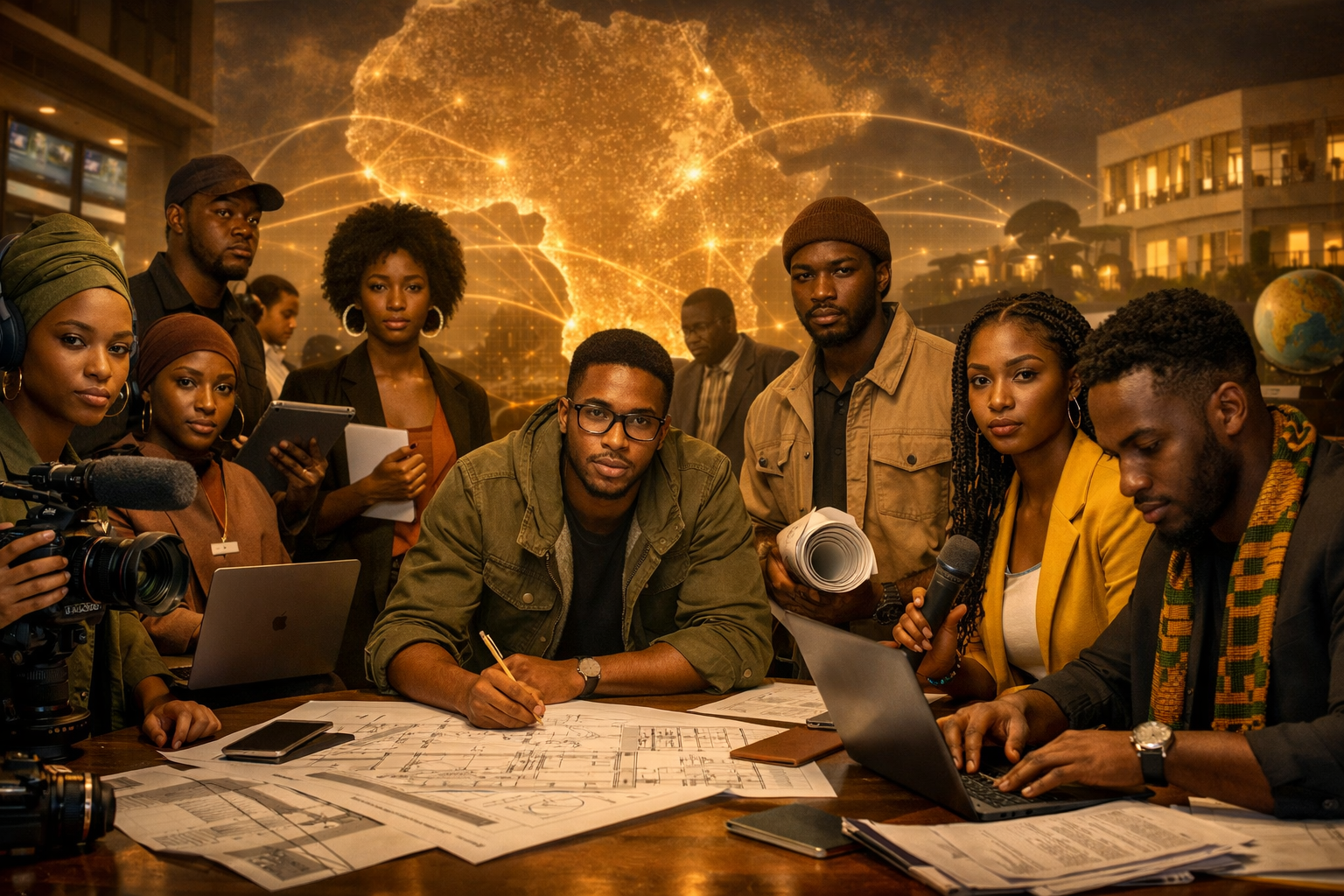
Too often, Black students are addressed primarily as beneficiaries of diversity efforts, recipients of scholarships, or future job applicants. A movement rooted in these traditions can adopt a different frame. Black students are not only to be helped; they are to be organized. They are researchers, media producers, organizers, future entrepreneurs, policy thinkers, partnership builders, and talent brokers in a world increasingly focused on Africa’s strategic importance.
That means the movement should not be built around symbolism alone. It should be connected to actual pathways. Students need visible routes into sectors tied to African development and diaspora engagement: media, technology, infrastructure, healthcare, education, logistics, trade, industrial development, policy, entrepreneurship, and procurement. They need to see how cultural grounding connects to practical opportunity.
This is where a Black Student Movement for African-Centered Opportunities becomes powerful. It can say to students: your history is not separate from your future. The same forces that once made Black labor extractable and Black identity disposable are still shaping who gains access to capital, contracts, institutions, and markets. But Africa’s rise, diaspora connectivity, digital media, and youth organizing now create a different possibility. Students can be prepared not only to seek placement, but to help shape ownership.
Media has a special role to play here. A movement requires more than theory and more than occasional mobilization. It requires infrastructure that teaches, recruits, connects, and directs. Through articles, interviews, newsletters, explainers, internship tracks, and opportunity hubs, media can help turn scattered student interest into durable strategic alignment. It can help students see Africa not as a distant subject of charity or crisis, but as a center of future industry, policy, and possibility.
To succeed, this kind of movement must avoid four common mistakes. It cannot become trapped in nostalgia, treating historical thought only as inspiration. It cannot settle for symbolism without pipelines. It cannot reduce itself to careerism without purpose. And it cannot remain abstract. Students need moral language, but they also need maps.
These maps can include research fellowships, media internships, policy labs, procurement literacy, entrepreneurship pathways, campus chapters, employer networks, and global student-to-student collaboration. They can include a curriculum that teaches both Black intellectual history and African political economy. They can include campaigns that challenge institutions to invest in Africa-centered workforce development rather than diversity rhetoric without structure.
In that sense, Negritude, Pan-Africanism, and Anti-Colonialism are not simply traditions to study. They are tools for design.
A Black Student Movement for African-Centered Opportunities should ultimately make one claim with confidence: Black students should not be organized only to fit into the world as it is. They should be organized to help shape the terms on which Black people participate in Africa’s future.
That is a deeper ambition than representation. It is closer to strategy.
And it is exactly the kind of ambition this moment requires.
Donate to GDN – Greater Diversity News | Subscribe – Greater Diversity News
Join the conversation—leave your take or a question.
Help grow The Economic Liberation of Africa conversation—forward to someone curious about Africa-centered opportunity.