
By Peter Grear with AI Assistance
April 20, 2026
At a time when Diversity, Equity, and Inclusion (DEI) programs are being dismantled across campuses and institutions, something equally important—but far less discussed—is happening in parallel: Black student leaders are building their own ecosystems of power, connection, and opportunity.
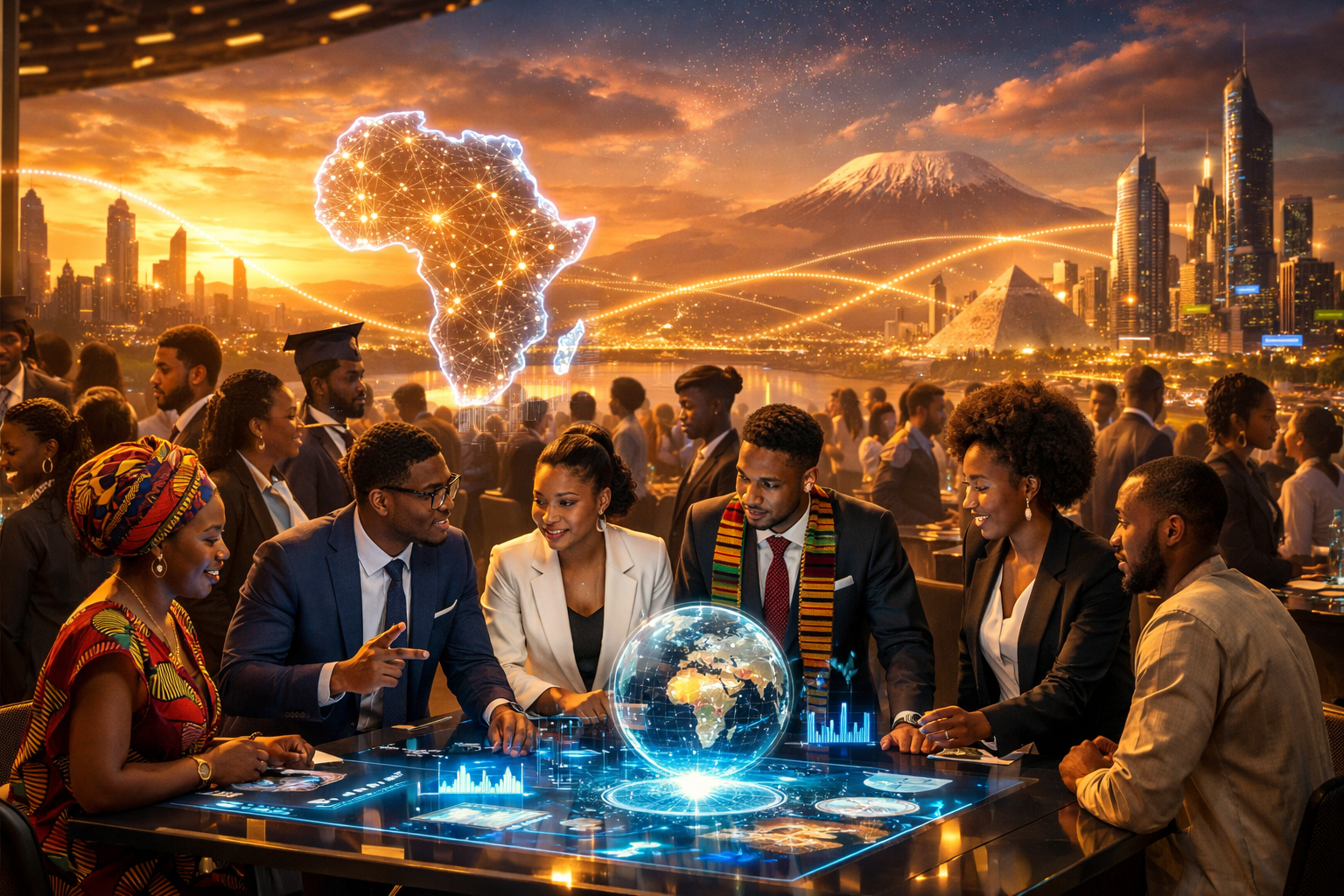
These ecosystems are not confined to a single campus or organization. They are emerging through national conferences, leadership networks, and Pan-African convenings that are quietly shaping the next generation of organizers, professionals, and global thinkers. If DEI once represented access to existing systems, these spaces represent something more ambitious: the creation of new systems altogether.
From Campus Isolation to National Connection
For many Black students, campus life can still feel isolating—especially as institutional support structures are reduced or removed. National conferences change that dynamic instantly. They take students out of fragmented campus environments and place them in rooms filled with peers who share similar ambitions, challenges, and cultural experiences.
One such space is the Black Students Lead Leadership Conference, a national convening that brings together student leaders and advisors to sharpen leadership skills and develop actionable strategies for campus and community impact. Here, students are not just participants—they are strategists, organizers, and visionaries.
Similarly, the African American Youth Leadership Conference (AAYLC) provides a pipeline for leadership development, connecting younger students to college pathways, civic engagement, and professional ambition. These conferences serve as entry points into a broader leadership identity, one that extends far beyond the classroom.
Pan-Africanism in Practice
While many conferences focus on leadership broadly, a growing number are explicitly rooted in Pan-African identity and global Black connection.
The Dr. Michael T. Fagin Pan African Student Leadership Conference & Festival stands out as one of the most enduring gatherings of its kind. For decades, it has brought together students from across the United States and beyond to engage with African history, diaspora identity, and collective progress. This is not just cultural celebration—it is political and economic consciousness in motion.
At events like these, students begin to see themselves not just as individuals navigating American institutions, but as part of a global African diaspora with shared challenges and shared opportunities. That shift in perspective is transformative. It reframes education, career choices, and activism within a broader mission: contributing to the advancement of Black people worldwide.
From Representation to Power
Another key gathering space is the annual conference of the National Council for Black Studies (NCBS), where students present research, engage with scholars, and explore issues affecting Black communities globally. What makes spaces like NCBS powerful is that they move beyond representation—they cultivate intellectual authority.
Students are not simply asking to be included in conversations. They are producing the knowledge that drives those conversations. They are defining the terms of engagement.
This marks a critical shift. In a moment where DEI initiatives are often framed around inclusion within existing structures, these conferences emphasize something deeper: the ability to shape, critique, and redesign those structures altogether.
Networks That Extend Beyond the Event
The impact of these gatherings does not end when the conference closes. Many are connected to ongoing networks and fellowships that sustain engagement throughout the year.
The Black Student Leadership Network (BSLN), for example, provides year-round training, mentorship, and organizing support through the Children’s Defense Fund. Students in this network are equipped not only to lead on campus, but to influence policy, mobilize communities, and build long-term movements.
Similarly, initiatives like Umoja XXI create culturally grounded pathways for student success, combining academic support with leadership development and community building. These programs reinforce a critical idea: leadership is not a moment—it is a continuous process.
A Strategic Opportunity for the Future
What is emerging from these conferences and networks is more than a collection of events. It is a distributed infrastructure for Black student leadership—one that operates across campuses, disciplines, and national boundaries.
For initiatives like The Economic Liberation of Africa, this represents a strategic opportunity. These students are not just future professionals; they are future investors, policymakers, entrepreneurs, and institutional architects. They are already organizing. They are already thinking globally. They are already seeking pathways to translate knowledge into impact.
The question is not whether this generation will lead. The question is whether institutions, organizations, and movements are prepared to engage them at the level of their ambition.
The New Gathering Spaces of Power
In many ways, these conferences and networks are becoming the modern equivalents of historic Black organizing spaces—places where ideas are tested, alliances are formed, and strategies are built.
But unlike previous eras, today’s student leaders are operating in a hyperconnected, globalized environment, where a conversation started at a conference can evolve into a movement within weeks.
As DEI programs face continued pressure, these independent ecosystems may prove to be even more important. They are not dependent on institutional approval. They are built on shared purpose, cultural connection, and a commitment to collective advancement.
They are, in every sense, the infrastructure of a new generation of Black power.
CALL TO ACTION
Donate to GDN – Greater Diversity News | Subscribe – Greater Diversity News
Join the conversation—leave your take or a question.
Help grow The Economic Liberation of Africa conversation—forward to someone curious about Africa-centered opportunity.